ABOUT PROJECT
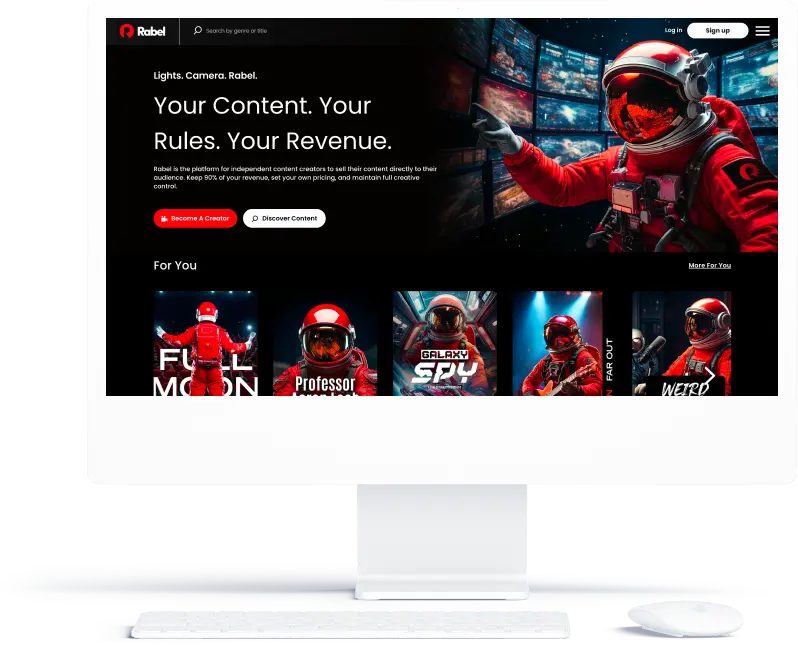
When Kalyn came to us with her vision for Rabel, we immediately got it. She wasn’t looking to build just another content platform – she wanted to create something that actually put money back in creators’ pockets. The problem was frustrating but simple: talented independent creators were handing over half their earnings to platforms that didn’t really have their backs. Kalyn wanted to change that entirely. Working alongside her as Product Owner, we built a marketplace that finally gives creators what they deserve – a fair 90/10 revenue split and the freedom to price their work however they want. It felt less like a typical client project and more like joining a mission we could genuinely get behind.
Here’s what we love about Rabel: it’s not trying to be complicated. We focused on making it dead simple – free to join, easy to use, and powerful enough to let creators run their business their way. Every feature we built came back to one basic question: does this actually help creators succeed? Working with Kalyn pushed us to think differently about what a content platform could be. It’s not about locking people into restrictive contracts or nickel-and-diming them with fees. It’s about giving creators the tools they need and then getting out of their way. Now, when we see creators thriving on Rabel, keeping most of what they earn while their audiences genuinely support them, we know we built something that matters.
Key Challenges
Building Rabel presented unique challenges. It wasn’t a standard e-commerce site but a creator-first platform with distinct needs. We managed a global team across time zones, requiring clear communication and flexible workflows. We also had to refactor a problematic inherited codebase.
Technically, it was highly complex. We integrated multiple third-party services for payments and content. Key hurdles included building a reliable system for high-quality video processing and designing secure, permanent storage for customers’ purchased assets.
TECHNOLOGY STACK


Solution Highlights
To make Rabel a reality, we handpicked tools that would give creators and audiences the smoothest possible experience. At the foundation, we used Sharetribe to power the marketplace itself, while Stripe handled secure payments so creators could get paid quickly and reliably. Cloudflare kept everything secure, and MongoDB gave us the flexibility to manage all the different types of content and interactions happening on the platform. To help fans find exactly what they’re looking for, we added Algolia, making search quick, smart, and intuitive.
Because Rabel is all about creators, we also needed a strong setup for handling their content. Wasabi gave us affordable and secure storage for files, while Gumlet made video hosting and processing seamless, so large, high-quality content could be uploaded and streamed without a hitch. To support creators in reaching their audiences, Klaviyo was integrated for marketing emails and SendGrid for timely notifications. And to keep improving the platform, we relied on HotJar to see how users actually engage with it. Finally, Strapi made it easy to manage catalog pages and keep content fresh.
THE PROCESS
01
Discovery & foundation (April 2025): We kicked things off in April by diving deep into what the previous agency had built and where things stood. Kalyn walked us through the existing platform, showing us what was working and what needed attention. It was about understanding the foundation so we could build something solid on top of it.
02
Stabilization & polish (May 2025): May was all about rolling up our sleeves and fixing what needed fixing. The previous agency didn’t have a chance to finish some features, and we knew we couldn’t move forward without completing them first. We spent the month squashing bugs, completing unfinished work, and making sure the platform was stable enough to handle what we had planned next.
03
Pay-as-you-go revolution (June 2025): In June, we introduced the PAYG subscription model, giving creators a flexible way to monetize their content beyond one-time purchases. This was huge because it meant audiences could support their favorite creators on an ongoing basis without committing to expensive long-term subscriptions.
04
Organizing content better (July 2025): July brought two major improvements: stream listing types and seasons functionality. Creators needed better ways to organize their content, especially those producing series or ongoing shows, so we built tools that let them structure everything logically.
05
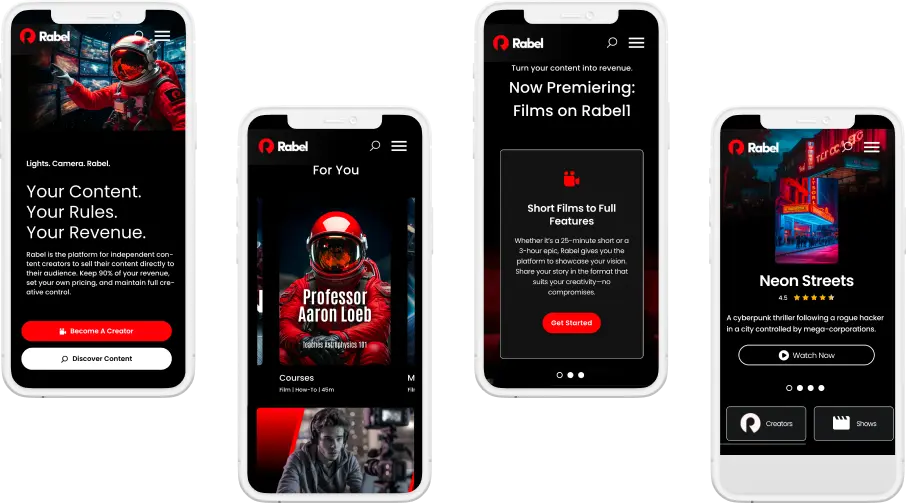
Elevating the experience (August 2025): We wrapped up the summer by completely redesigning the product page and streamlining the entire transaction process. The goal was simple: make it easier for audiences to discover content and actually complete their purchases without friction.
Main Features
A non-usual marketplace
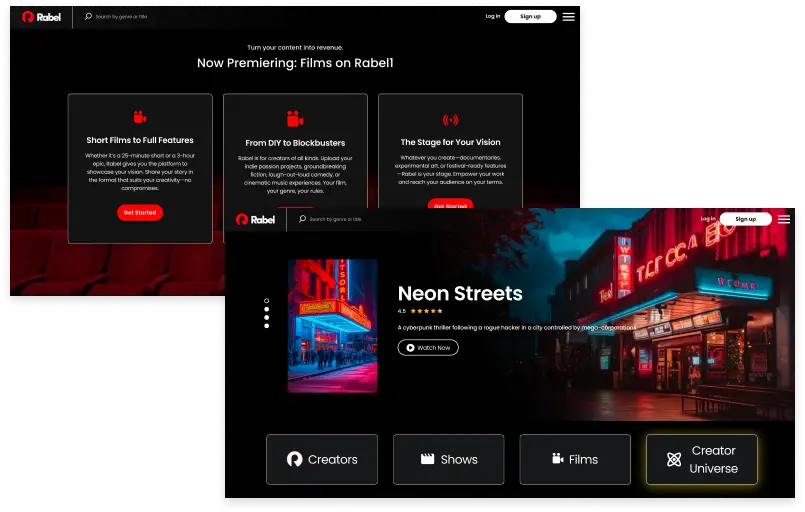
Unlike the e-commerce and rental marketplaces we typically build, Rabel was designed as a creator-first ecosystem. This meant rethinking flows, revenue models, and user journeys from the ground up to support creators in selling premium content directly to their fans.
Working across time zones
With the team distributed across different regions and time zones, maintaining smooth collaboration required extra coordination and clear communication. We set up clear communication rituals and overlapping working hours, ensuring decisions were made quickly despite the distance.
Cleaning up inherited bugs
Before introducing new functionality, we took the time to analyze and strengthen the existing system, ensuring that the platform was ready for the next phase of growth. We are implementing automated testing and quality control so future development can move forward confidently.
Complex integrations
Rabel needed to connect with a wide range of services — from payments and storage to marketing and analytics. We carefully stitched these systems together, ensuring they worked seamlessly as one ecosystem without disrupting the creator or user experience.
Video file processing
Since much of the content on Rabel is video, smooth uploading and playback were critical. We implemented reliable video processing pipelines that could handle large files efficiently, ensuring creators could share high-quality content and audiences could stream without interruptions.
Alternative storage for purchased assets
To guarantee long-term access for users who support creators, we built an additional storage solution for purchased content. This redundancy ensures files remain secure, accessible, and protected even as the platform scales.
Watch how we built Rabel
RESULTS
What made our partnership with Rabel work was honest, constant communication. Kalyn and the team needed us available for at least two hours during their working day, and we made that happen – no delays, no waiting around for responses. This wasn’t a “send an email and wait three days” kind of project. They’d give us feedback in the morning, and we’d have updates ready by afternoon. That speed kept everything moving forward, even when priorities shifted.
The pace was intense but energizing. We jumped on calls twice a week to sync up, review progress, and tackle whatever new challenge had popped up. And here’s the thing about working with founders like Kalyn – the vision evolved as they learned what their creators actually needed. Ideas changed, features got reprioritized, and we had to stay flexible. Some agencies might find that frustrating, but we saw it as a sign we were building something real, something that responded to actual user feedback rather than just checking boxes on an old spec sheet.
Lessons from RAbel
When we first took on the Rabel project, it was clear from the start that this wouldn’t be a typical entertainment & event marketplace development project. It had already been initiated by another agency, so when we joined, our first step was to dive deep into the existing setup and get a clear picture of what had been done and what still needed attention. Picking up the codebase was challenging – it came with some unfinished parts and areas that needed refinement to align with the project’s goals. For us, this became a crucial lesson in patience, thorough QA, and structured problem-solving.
As the project progressed, every challenge became an opportunity to grow. The client frequently adjusted requirements, and we adapted by documenting every discussion, refining the BA and design processes, and ensuring that all new features were clearly scoped and tracked. Implementing the new transaction process, Stripe Pay-as-You-Go subscriptions, the unified content uploader, and the Seasons functionality for shows pushed our technical and creative boundaries.
CLIENT TESTIMONIAL
Kalyn McDonald
Co-Founder & Managing Partner, Rabel
MORE PROJECTS