What Is a Camping Marketplace?
How Big Is the Camping Market in 2026?
What Are the Best Camping Marketplace Examples?
What Features Does a Camping Marketplace Need?
How to Build a Camping Marketplace? (Step-by-Step)
How Much Does It Cost to Build a Camping Marketplace?
Subscribe and you will promptly receive new published articles from the blog by mail
A camping marketplace connects campers with campgrounds, private land, gear rentals, or guided trips through one booking platform. The global camping and outdoor recreation market is worth well over $50 billion and still climbing, which is why campground marketplace with booking system products like Hipcamp and The Dyrt keep raising money. Building one takes roughly 8 steps, a working knowledge of rental marketplace architecture, and a decision between a no-code platform like Sharetribe and a full custom build. Roobykon Software’s new guide walks through all of it, including how to build campsite booking platform features that hosts and campers actually trust.
- A camping marketplace matches campers with campgrounds, private land, or gear rentals through one booking platform, and the category is growing 6–8% a year.
- Study existing players – Hipcamp, The Dyrt, Outdoorsy, Tentrr – before picking a niche; none of them try to do everything, and that's exactly why they work.
- Must-have features are search, real-time availability, secure checkout, host dashboards, reviews, and messaging; gear rental adds its own rental marketplace architecture requirements on top of that.
- Building follows roughly 8 steps: validate, research supply and demand, choose a business model, design the user experience, choose technology, develop MVP features, test and launch, scale and optimize.
- Costs range from $5K on Sharetribe to $250K+ for a fully custom platform, depending on complexity and scale ambitions, and ongoing costs deserve just as much attention as the launch budget.
- Sharetribe is the fastest way to test an idea; custom camping marketplace development is what most platforms eventually need once they outgrow the template.
What Is a Camping Marketplace?
A camping marketplace is a two-sided online platform. On one side sit campground owners, private landowners, RV park managers, or gear rental companies. On the other side sit travelers looking for a place to pitch a tent, park an RV, or rent a kayak for the weekend.
The platform itself does the matching. It handles search, availability, booking, and payment, so neither side has to trust a phone call and a handshake. That’s the whole pitch behind camping marketplace development: turn a fragmented, offline booking process into something that works like Airbnb, but for the outdoors.
Beyond Campsites: Expanding Inventory
Some platforms go further and add gear rental, guided tours, or even camp-adjacent experiences like fishing permits or campfire cooking classes. The more inventory types a platform supports, the more it starts to resemble a general outdoor-recreation marketplace rather than a narrow campsite finder.
Why the Definition Matters
It’s worth checking a guide to marketplace categories, too, because getting this precise shapes every later decision. A directory that just lists campgrounds with phone numbers isn’t a marketplace – there’s no booking, no payment, no accountability on either side. Plenty of “camping directories” have tried to rebrand themselves as marketplaces without changing the underlying product, and it never quite works. A true marketplace closes the loop: discovery, availability, checkout, and post-stay review, all inside one product, with nobody needing to pick up a phone.
How Big Is the Camping Market in 2026?
Camping today is a mainstream travel category with real money behind it. If you’ve been to a campground in the last few years, you’ve probably noticed it yourself: more tents, more rooftop tents, more people who clearly bought their gear last month. A few numbers explain why founders keep building in this space.
Metric | Figure |
|---|---|
Global camping & caravanning market (2025 est.) | |
Fastest-growing camper segment | Millennials & Gen Z, first-time campers |
Average annual growth rate (CAGR) | 6–8% |
RV and outdoor gear rental market | Growing faster than campsite bookings alone |
The core statistics from The Dyrt Camping Report Presented by Toyota Trucks highlight key participation numbers, preferred camping styles, demographic shifts, and booking dynamics:
Category | Key Metric / Statistic | Context & Details |
|---|---|---|
Overall Participation | 82.4 Million total campers | Second-highest total on record, behind only 84.8M in 2023. |
New Campers | 2.6 Million first-time campers | Signals ongoing expansion in the overall camping base. |
Lifetime Participation | 85% of U.S. adults | Have gone camping at least once in their lifetime. |
Trip Frequency | 6 median trips per year | Indicates strong, active engagement among regulars. |
Primary Accommodation | 52.2% RV / Trailer | Remains the most popular camping type overall. |
Activity Ranking | #3 Outdoor Activity in U.S. | Ranked behind walking (#1) and swimming (#2), ahead of hiking (#4). |
Booking Difficulty | > 50% experienced difficulty | Most campers report trouble securing sites due to fully booked campgrounds. |
Age Trends (RVs) | 64% of campers 65+ use RVs | RV usage scales steadily with age (only 21% for ages 34 and under). |
Property Expansion | 20% of private properties added sites | Over half (51.6%) of added sites were dedicated to RVs. |
Two forces are driving the growth, and neither of them is going away anytime soon. First, “glamping” and boutique camping experiences pulled in travelers who’d never pitched a tent before and probably never will – they want the view without the ground mat. Second, remote work made multi-week road trips realistic for people who used to be tied to an office five days a week.
That combination is exactly why investors keep funding camping website platform startups, and why more agencies get requests to develop camping marketplace products from scratch. It also explains why gear rental is growing almost as fast as bookings – campers who never owned a tent still want to try a weekend outdoors, and renting a $400 setup for one trip beats buying it and storing it in a closet for the other 51 weeks of the year.
What Are the Best Camping Marketplace Examples?
Before building anything, it helps to study who’s already winning – and, just as importantly, what each of them chose *not* to do. Each of these platforms solved a slightly different piece of the camping puzzle.
Hipcamp – The Category Leader
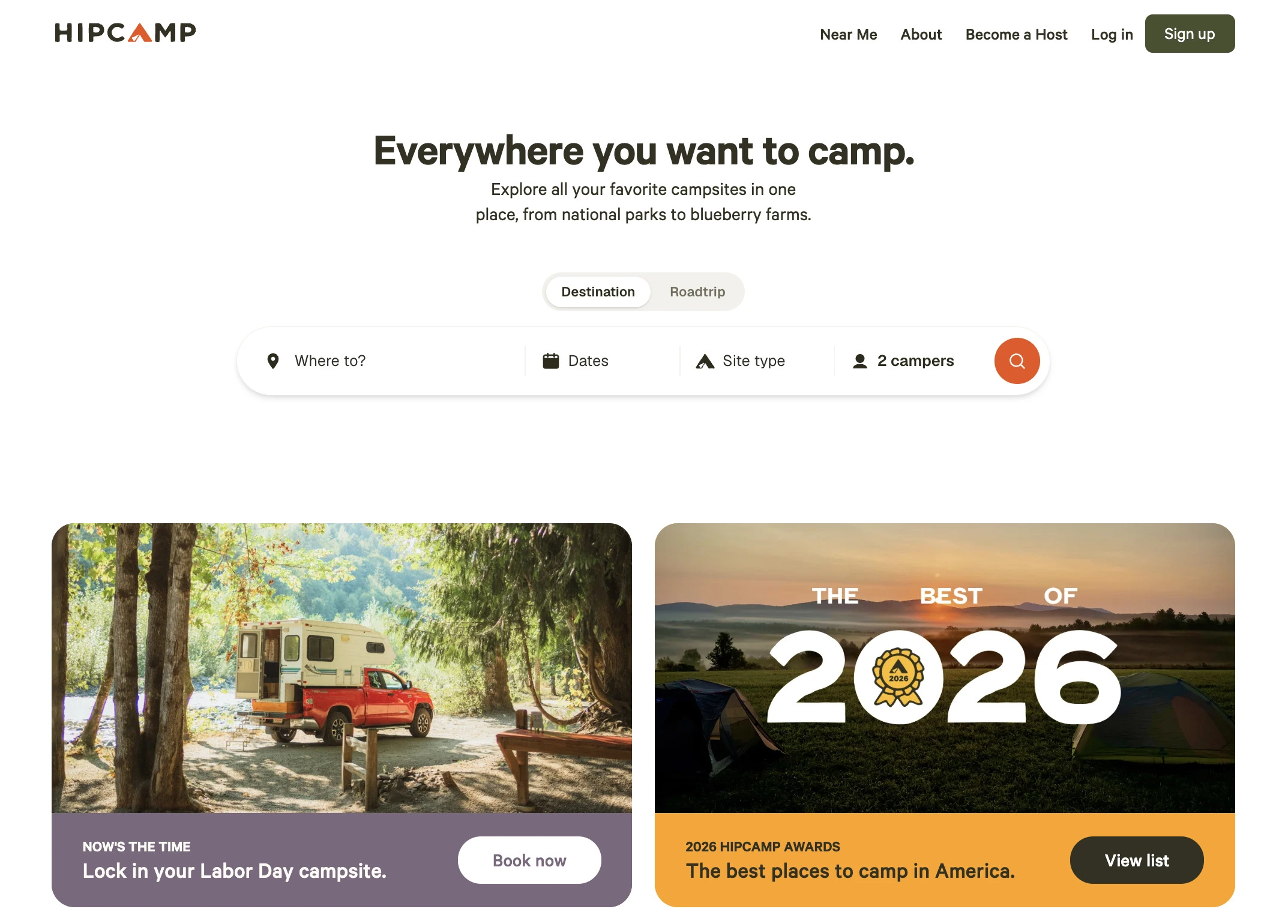
Hipcamp built a movement. By unlocking private land, they turned millions of acres of farmland, ranches, and vineyards into bookable campsites. Hosts earn an average of $45,000 extra per year, and top performers push past $200,000. The secret? They focused on conservation and community – every booking helps fund land stewardship.
Tentrr – The Glamping Factory
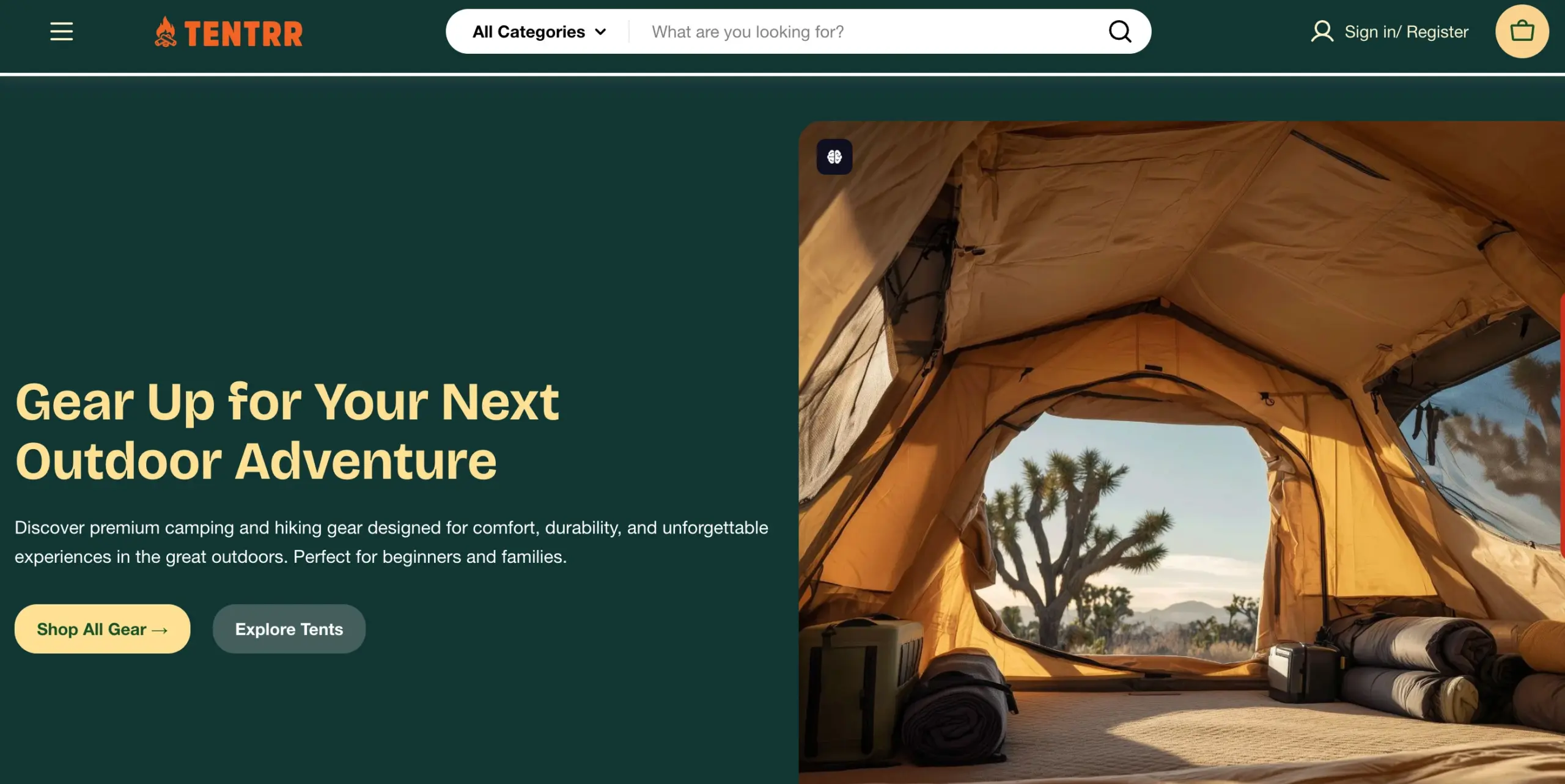
Tentrr flipped the model: instead of letting hosts manage their own setups, they install standardized canvas tents with comfy beds, solar lights, and campfire kits. It’s camping without the hassle. For hosts, it’s a turnkey income stream. For guests, it’s an Instagram‑ready adventure. This is a masterclass in reducing friction for both sides.
The Dyrt – The Community‑Powered Directory
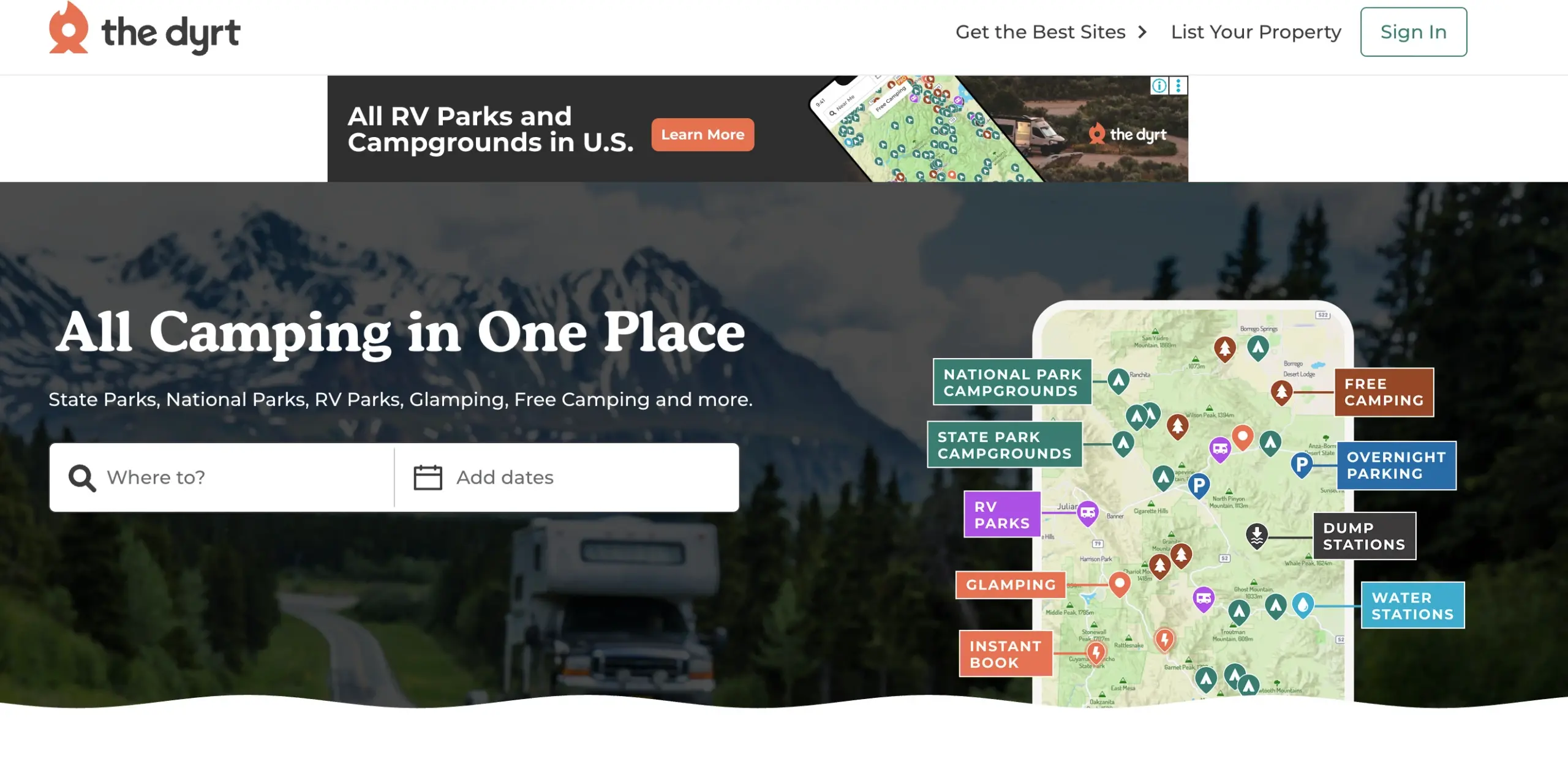
The Dyrt is a massive database of campgrounds with millions of user reviews. But it shows the power of content. Before you can build a camp website that books, you need to become the go‑to source for information. The Dyrt’s community of millions proves that trust and user‑generated content are the foundation of any outdoor platform.
Outdoorsy – The RV Rental Giant
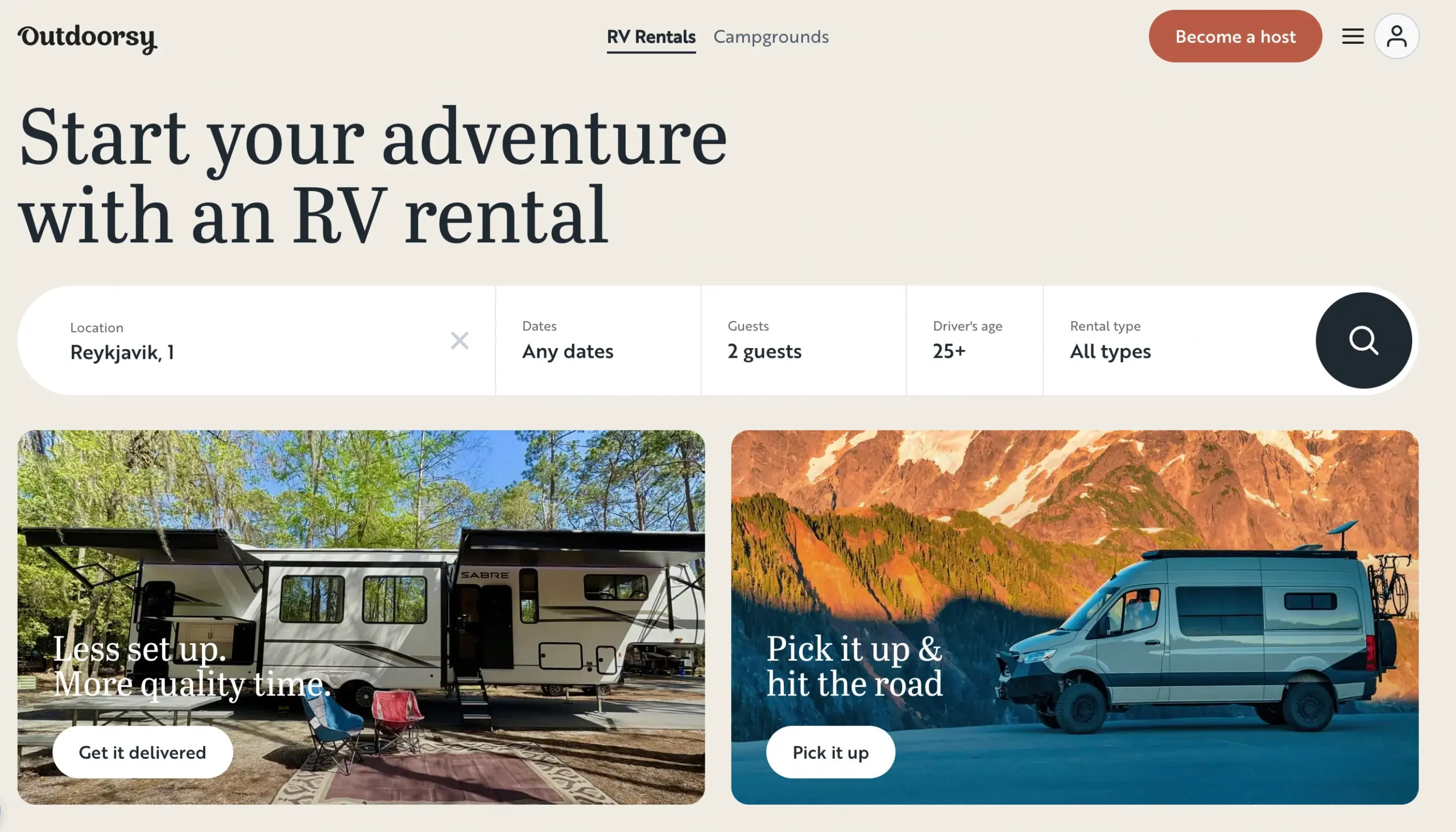
Outdoorsy is the Airbnb of RVs, with a peer‑to‑peer rental platform spanning five countries. It’s a brilliant example of how to build gear rental marketplace functionality – they started with RVs and expanded to camping gear, trailers, and even off‑road vehicles. The lesson? Start with one category, then expand.
Wacampa – A Roobykon Success Story
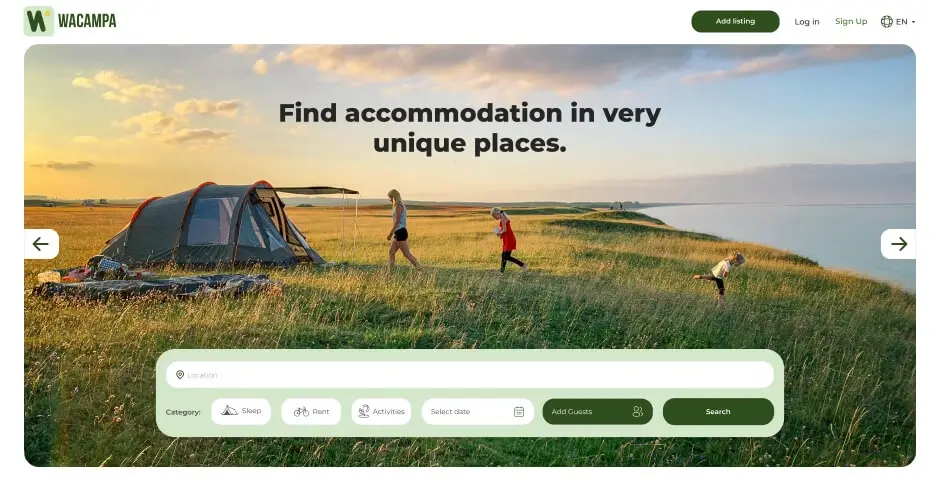
Sometimes the best examples are the ones you build yourself. Wacampa was created as a dynamic marketplace platform that caters to people passionate about tourism, an active lifestyle, and comfortable accommodations. Built by Roobykon, Wacampa aimed to connect adventure‑seekers with unique overnight stays and engaging activity spaces – from hotel‑style accommodations to bicycle rentals and guided tours.
The challenge: Creating a camping platform that served both providers and clients equally well. Providers needed a straightforward way to list their services, while clients required an intuitive interface for searching and booking. Our team also implemented a seamless payment processing integration that handled different currencies and provided a hassle‑free booking experience.
Perhaps the most complex challenge was building a dynamic cost calculation system that could handle pricing for different groups – adults, children, and seniors – with appropriate discounts.
The solution: Roobykon built Wacampa using React for the front end, Node.js APIs for backend operations, and Sharetribe as the backbone to craft a tailored experience. The platform included:
- Custom filters for searching by category, date, location, and number of guests
- Three types of listings: Sleep, Rent, and Activities – each with its own structure, the kind of build where founders often hire a multivendor marketplace developer instead of tackling it solo
- Multi‑language support (English and Polish)
- Flexible cancellation policies and automated notifications
- Sophisticated discount logic based on children’s age, group size, and duration
- Daily booking per unit or per person with real‑time cost calculation
The result: Wacampa launched in June 2023 and had become a haven for tourism enthusiasts, active lifestyle pursuits, and those searching for comfortable accommodations. The platform demonstrated how thoughtful camping marketplace development – with attention to multilingual needs, legal compliance across regions, and sophisticated pricing strategies – can create a truly international product.
Lessons You Can Learn from These Camping/Gear Rental Marketplaces
Notice that none of these are identical, even though they’re all technically camping marketplaces. Hipcamp leans into private land and search filters, betting that supply is the hard part and letting almost anyone list a patch of land. Outdoorsy leans into vehicle rentals and insurance instead, because renting out a $60,000 RV comes with an entirely different risk than renting a tent site. Tentrr leans into a curated, hotel-like experience instead of open marketplace listings, which trades supply growth for consistency – every Tentrr site looks and feels roughly the same, on purpose.
That’s the first real lesson before diving into a build: pick a lane before writing a line of code. A platform trying to be all five of these at once usually ships slower, confuses its first users, and burns through runway explaining itself instead of growing. It’s tempting to build “the everything app for the outdoors” on day one. Almost nobody who’s actually done this successfully started that way.
What Features Does a Camping Marketplace Need?
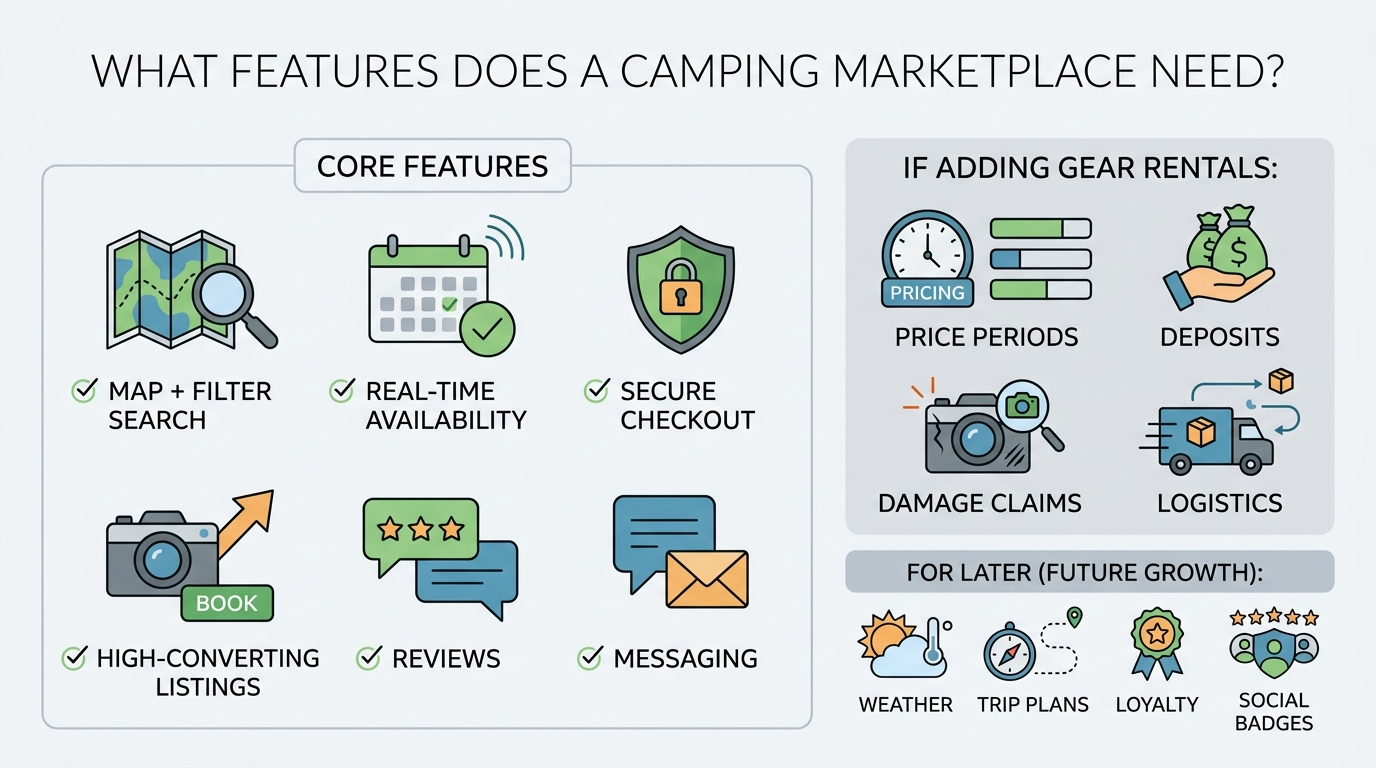
Every successful campground marketplace with booking system shares a common core, even when the branding looks completely different. Below is what actually matters at launch versus what can comfortably wait until later.
Must-Have Features At Launch
Feature | Why it matters |
|---|---|
Search with map & filters | Campers search by location, dates, amenities, and price |
Real-time availability calendar | Prevents double-bookings on both sides |
Secure checkout | Card payments, deposits, cancellation rules |
Camp presentation listing | Turns browsers into bookers |
Reviews & ratings | Trust signal for both campers and hosts |
Messaging | Pre-booking questions, check-in instructions |
None of these are glamorous. That’s kind of the point – a camper deciding between your platform and a competitor rarely picks based on which one has a nicer onboarding animation. They pick the one where the calendar is actually accurate, and the checkout doesn’t feel sketchy.
Features That Matter For Gear and Rental Add-ons
If the platform also lets hosts build a gear rental marketplace alongside campsite listings, a few extra pieces of rental marketplace architecture come into play, on top of whatever else made the list of best rental business ideas to start. Here are the must-haves:
- Rental-period pricing: rates structured around specific rental durations
- Deposit holds: temporary authorization or hold on funds
- Damage-claim workflows: process for reporting and resolving damage
- Delivery or pickup logistics: handling how gear gets to and from renters
These need to be designed into the data model from day one, or retrofitting them later gets expensive and, frankly, kind of miserable for whoever’s writing the migration scripts.
Nice-To-Have, But Not Urgent
Some rental marketplace features add polish but shouldn’t hold up launch. They include:
- Trip planning tools
- Weather integration
- Loyalty programs
- Social features – photo feeds, “camped here” badges
None of them should block a first launch. They’re easy to bolt on once the core booking loop is proven and hosts are actually getting bookings. Founders who insist on shipping all of this in v1 tend to still be “almost done” a year later.
How to Build a Camping Marketplace? (Step-by-Step)
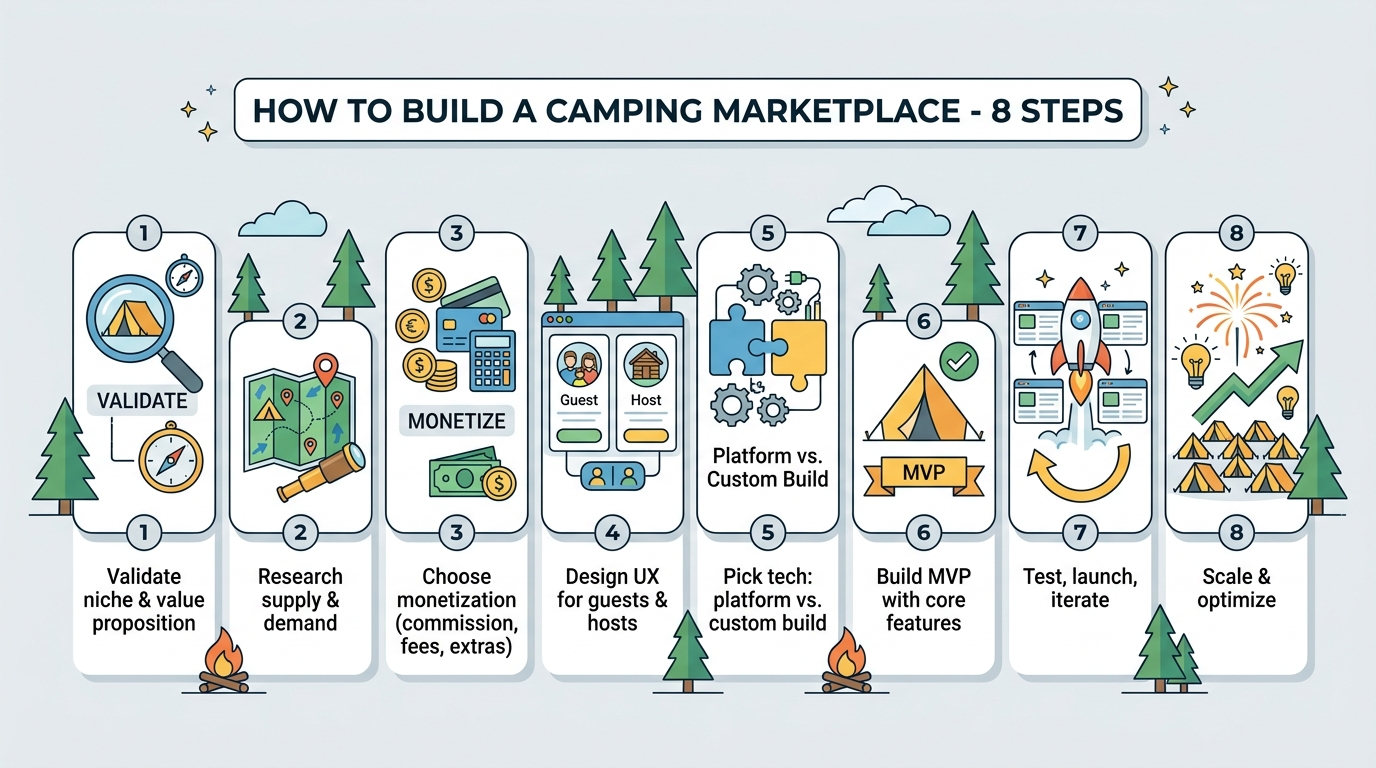
So, how to build camping digital platform that actually works, without spending eighteen months and a Series A on it? There’s no single “correct” order, but most successful launches follow roughly the same 8 steps.
Step 1: Validate Your Niche and Define Your Value Proposition
Before any camping marketplace development, answer these questions:
- What’s your geographic focus? Local, regional, national, or global?
- What type of camping? Tent sites, RV parks, glamping, backcountry, or all?
- What’s your unique angle? Private land access, eco-friendly stays, pet-friendly, luxury, budget?
- Who are your early adopters? Weekend warriors, digital nomads, families, solo adventurers?
Successful camping marketplaces solve specific problems. Hipcamp solved private land access. Tentrr solved the gear barrier. The Dyrt solved discovery. Find your problem.
Step 2: Research Supply and Demand
You need to know who you’re building for, and whether they actually want what you’re offering.
- Identify potential hosts in your target region (private landowners, farmers, small campgrounds)
- Understand guest demand through surveys, keyword research, and competitor analysis
- Analyze pricing benchmarks in your market
- Study seasonal patterns – camping is seasonal, and your platform needs to handle that
Step 3: Choose Your Business Model and Monetization
Camping marketplaces typically monetize through commission fees, though the right fee structure depends heavily on which of the top marketplace business models to build a founder settles on:
- Host commission: 5-15% per booking (Hipcamp charges around 10%)
- Guest service fee: 5-15% per booking
- Combined model: Fees on both sides (Campanyon takes 17% from guests and 5% from hosts)
Additional revenue streams:
- Premium listing features
- Insurance products
- Partnerships with outdoor gear companies
- Advertising
Step 4: Design the User Experience
Map the user journey for both guests and hosts:
- Guest: Search → Filter → View listing → Check availability → Book → Pay → Stay → Review
- Host: Create listing → Set availability → Manage bookings → Receive payment → Review guests
Design principles for camping marketplaces:
- Visual-first: High-quality imagery is critical for selling outdoor experiences
- Mobile-first: 60%+ of outdoor bookings happen on phones
- Simple booking flow: Minimize friction in the booking process
- Trust signals: Show reviews, verification badges, and insurance coverage prominently
Step 5: Build or Choose Your Technology Solution
This is the most critical decision in your rental marketplace architecture journey (see the next section for a detailed comparison).
Option A: Use a marketplace platform (Sharetribe, Medusa.js, etc.)
- Faster launch (weeks instead of months)
- Lower upfront cost
- Limited customization
- Platform dependency
Option B: Custom development (recommended for serious players)
- Full control over features and user experience
- Scalability on your terms
- No platform fees or vendor lock-in
- Higher upfront investment
- Longer development timeline
If you’re serious about building a camping marketplace that can compete with the likes of Hipcamp, custom development is the path. A generic platform won’t give you the flexibility to create unique camping-specific features, optimize for your niche, or scale without paying ever-increasing platform fees.
Step 6: Develop Core Features (MVP First)
Start by learning how to validate a marketplace with an MVP (Minimum Viable Product) that includes:
- User registration and profiles
- Property listings with photos and descriptions
- Search with filters (location, dates, price)
- Booking system with availability
- Payment processing integration
- Reviews
- Host dashboard
Don’t build everything at once. Launch with the essentials, gather user feedback, and iterate.
Step 7: Test, Launch, and Iterate
Before going public, put your platform through its paces with real users in a controlled environment.
- Beta test with a small group of hosts and guests
- Collect feedback on usability, bugs, and feature requests
- Monitor performance (speed, uptime, booking conversion)
- Iterate rapidly based on real user data
Step 8: Scale and Optimize
Once the core experience is solid, shift focus from survival to growth, and start thinking bigger.
- Add features based on user demand (equipment rentals, experiences, insurance)
- Expand geographically to new regions
- Optimize for SEO and AI visibility
- Build mobile apps for better user experience
How Much Does It Cost to Build a Camping Marketplace?
The cost of creating a camping website platform depends almost entirely on the build path chosen in Step 5, and the honest answer to “how much will this cost me” is “it depends” – but here’s a realistic range for 2026 to at least start the conversation.
Approach | Typical cost | Timeline | Best for |
|---|---|---|---|
No-code (Sharetribe) | $0–$5,000 | 4–8 weeks | Validating an idea fast |
Semi-custom (Sharetribe + custom code) | $5,000–$25,000 | 2–4 months | Growing platforms with specific needs |
Fully custom build | $50,000–$250,000+ | 6+ months | Platforms with unique booking logic, gear rental, or scale plans |
Ongoing costs matter just as much as the initial build, and they’re the number founders most often forget to budget for. Hosting, payment processing fees, customer support tooling, and continuous feature work usually run 15–25% of the original build cost per year – the platform doesn’t stop needing attention the day it launches.
It’s also worth budgeting for the parts that never show up on a spec sheet: host onboarding support, content moderation, and customer service during peak season. A camping marketplace lives or dies by trust between two strangers, and trust doesn’t run on autopilot. Someone has to answer disputes fast, especially in the first year of camping marketplace development, when every bad experience is disproportionately loud because there aren’t yet a thousand good reviews to drown it out.
Sharetribe vs Custom Development for Camping Marketplaces
This is the question almost every founder asks before committing budget, usually somewhere around 2 am with six browser tabs open. Sharetribe is a no-code marketplace builder; custom development means writing bespoke software, often on a framework like Ruby on Rails.
Factor | Sharetribe | Custom Development |
|---|---|---|
Speed to launch | Fast (weeks) | Slower (months) |
Upfront cost | Low | Higher |
Flexibility | Limited to platform’s data model | Unlimited – built around your exact workflow |
Gear rental / complex pricing | Workarounds needed | Native support possible |
Scalability ceiling | Can hit limits at scale | Built to scale with the business |
Ownership of code | Partly | Fully owned IP |
Sharetribe is genuinely a smart starting point for testing a camping marketplace concept before raising money or committing to custom marketplace development services. There’s no shame in starting there – plenty of camping website platforms that are custom-built today started as a Sharetribe instance nobody outside the founding team ever saw.
That’s usually the moment founders start looking for a partner that can either extend Sharetribe with custom code or migrate the whole thing to a fully owned online peer-to-peer marketplace built specifically around camping and rentals. A platform aimed at RV owners, tour guides, or equipment lenders is really just a rental platform for startups wearing camping branding – the underlying architecture is the same, whether the inventory is a tent site, a canoe, or a Class C motorhome.
Why Choose Roobykon to Build Your Camping Marketplace?
Roobykon Software is a marketplace-focused development agency and a Sharetribe Verified Expert – which matters, because most camping marketplace builds start on Sharetribe and only later need custom engineering, and it helps enormously to work with a team that’s comfortable on both sides of that line.
A few reasons founders in this space work with Roobykon:
- Marketplace specialization. Roobykon doesn’t build generic websites – our team lives inside two-sided platforms, from campsite booking to gear rentals to service marketplaces, day in and day out.
- Sharetribe expertise, with a custom-code exit ramp. Start lean on Sharetribe, then extend or migrate to custom Ruby on Rails development as the platform outgrows the template, without starting from scratch.
- Real payment integration experience, including payment processing integration with Stripe-based payouts for two-sided marketplaces, deposits, cancellations, and host payouts.
- Client case studies across rental and booking platforms, not just theoretical know-how – the kind of hard-won detail that only comes from having shipped this before.
For a founder trying to decide between a weekend Sharetribe build and full camping marketplace development, that’s exactly the conversation Roobykon has every week, and it usually starts with a lot fewer assumptions than the founder walked in with.
Ready to turn your camping marketplace idea into reality?
Roobykon specializes in building custom marketplace platforms that scale. Get in touch to discuss your project.
Contact us
Recommended articles
 From Idea to Launch: How to Build a Two-Sided Marketplace That People Actually Use
Thinking about building a two‑sided marketplace? In 2026, you can launch an MVP without coding in days, but scaling requires custom logic, multi‑vendor payouts, and a robust trust layer. Roobykon's guide breaks down business models, feature priorities, software options, and what it actually costs to go custom.
 How to Build an Online Learning Marketplace
Online learning is the industry that grows and expands every day. So it’s a great opportunity to start a nice business here. Even though there are lots of online courses, there are still a lot of free niches for special platforms and you can create one of those yourself.
 How to Build a Marketplace with Sharetribe: A Complete Guide
What can you build with no-code Sharetribe, and when do you need a developer? This article provides a clear roadmap for founders.
 How to Build a Car-Sharing Website Like Turo: Complete Guide for 2026
Thinking about launching a peer-to-peer car sharing platform like Turo? This complete 2025 guide walks you through everything from business models and key features to insurance, tech stack choices, and growth tactics.