What Exactly is a Marketplace MVP?
Why Your 2026 Startup Can’t Afford to Skip the MVP
Your Step-by-Step Guide to Building a Marketplace MVP in 2026
Essential Metrics: Is Your MVP Marketplace Succeeding?
Common MVP Mistakes to Avoid in 2026 (And Beyond)
Subscribe and you will promptly receive new published articles from the blog by mail
Let’s dismantle a dangerous myth: that success in 2026’s digital economy requires a flawless, feature-rich platform at launch. The data screams otherwise. Evidence reveals that startups using an MVP approach have a 60% higher success rate than those launching full products. Why? Because while others are busy building in isolation, MVP entrepreneurs are learning in the open. They understand that around 70% of companies gain better user insights from MVPs, transforming guesswork into guided strategy.
For you, the marketplace visionary, this means your first milestone is a validated exchange. It’s achieving that critical 40%+ user retention benchmark and tuning the vendor-to-buyer ratio until the network hums with liquidity. This is the modern blueprint: building an MVP marketplace is the fundamental process of turning your conviction into a thriving, data-proven reality.
What Exactly is a Marketplace MVP?
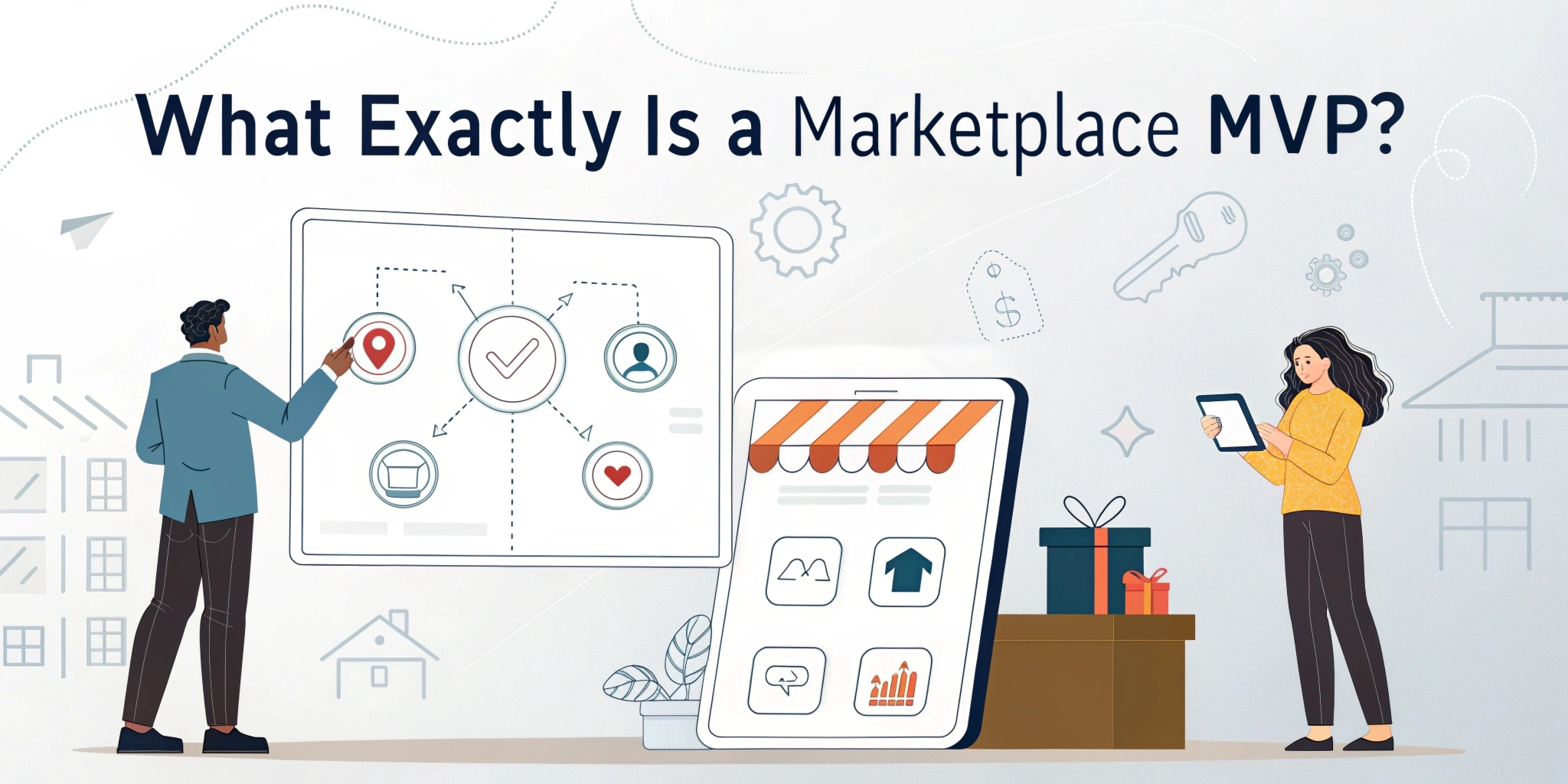
A Minimum Viable Product (MVP) for your online marketplace is the simplest, most honest version of your platform that actually works. It’s not a half-built prototype or a speculative slide deck. It’s a living, breathing MVP site where real transactions between real people can happen, generating genuine data and priceless insights. If you’re looking for a real-world example of this in action, take a look at how Airbnb started, and see what it takes to build a website like Airbnb from the ground up.
Think of MVP for an online marketplace as the first chapter of your novel, the pilot episode of your series. Its core goal is to validate one powerful, central hypothesis: Do people actually want to use my marketplace to solve this problem, and will they exchange value here? It’s about learning, not launching a final product. This focus on validation is what truly separates an MVP from other early-stage strategies, which is crucial to understand when considering the MVP vs MMP vs MLP spectrum – from proving a core need to building a marketable or lovable product.
In essence, your MVP ecommerce marketplace is a scientific experiment in business form. You are testing the fundamental unit of economic exchange you wish to create.
Why Your 2026 Startup Can’t Afford to Skip the MVP
In 2026, user attention is the ultimate currency, and development resources are precious. Building a full-featured marketplace platform without validation is like constructing a beautiful, AI-powered restaurant in a ghost town – a costly exercise in silence.
- Preserve your capital & sanity: An MVP marketplace requires a fraction of the investment of a full build, letting you test your riskiest assumptions without betting the farm. It confines your risk to a controlled, measurable environment.
- Learn from real human behavior, not only surveys: Data is gold, but behavioral data from real users is a treasure map. An MVP shows you the unexpected paths people take, the buttons they ignore, and the hidden friction points in your flow. This is the raw truth you cannot get from a focus group.
- Secure stakeholder buy-in with evidence: Nothing convinces investors, partners, or early team members like a working product with early, organic traction. An MVP transforms your pitch from “I believe” to “I have evidence.”
- Build the Right Thing, Faster: By focusing on the core transactional value, you avoid months of building features nobody wants. This agile, learn-fast approach is the bedrock of modern MVP development.
- Establish Early Trust and Community: Your first 100 users can become your most ardent evangelists if you build with them. An MVP for marketplace startup allows for this intimate, collaborative relationship.
Your Step-by-Step Guide to Building a Marketplace MVP in 2026
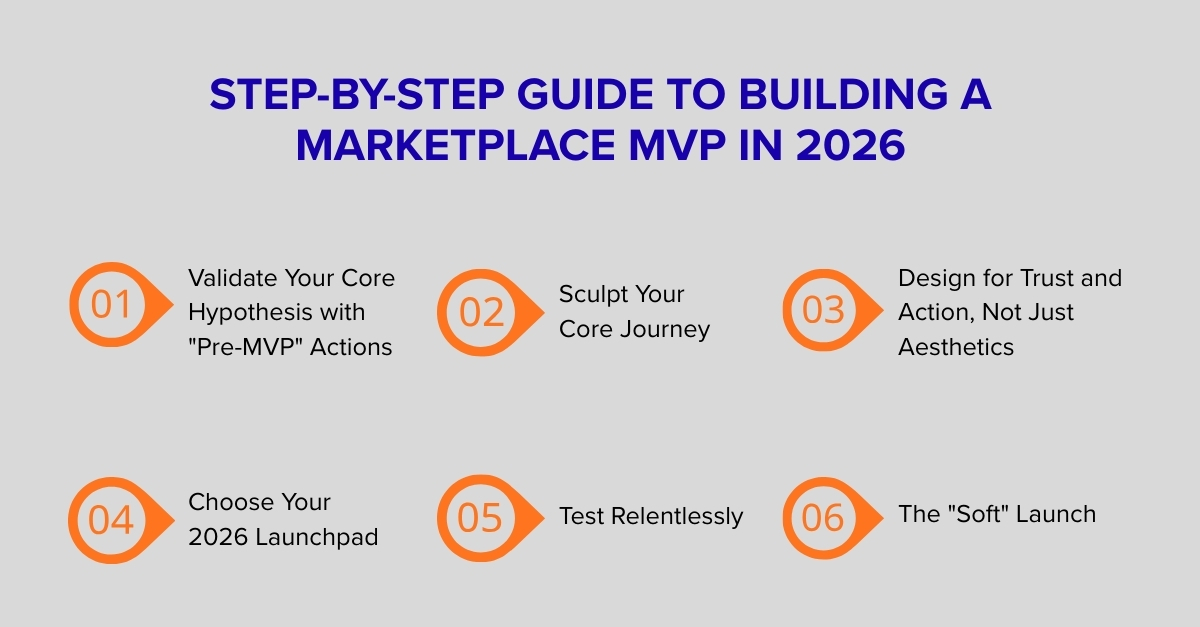
Step 1: The Foundational Pour – Validate Your Core Hypothesis with “Pre-MVP” Actions
Before a single line of code is written, get brutally specific. This is the most critical phase for any MVP entrepreneur. It’s where you complete the crucial steps before starting a marketplace, transforming a vague idea into a testable hypothesis. This means:
- Define your two-sided beachhead: Who are your first 50 sellers and your first 500 buyers? Be hyper-specific. (e.g., not “photographers,” but “independent portrait photographers in Austin, TX, with an Instagram following under 10K”).
- Articulate the single pain point: What is the one inefficient, expensive, or frustrating transaction you are simplifying?
- Design a “fake door” test: Can you simulate the marketplace manually? Use a simple Google Form, a curated WhatsApp group, or even a manual matchmaking service. This “Wizard of Oz” MVP can prove demand before any software exists.
- Document your riskiest assumption: Is it that suppliers will list? That buyers will pay online? That the fee structure is accepted? Name it.
Step 2: Sculpt Your Core Journey – The “Must-Have” vs. “Could-Have” Battle
Resist feature creep with every fiber of your being. For a marketplace MVP, the absolute essentials are the skeleton of your transaction:
- Onboarding & profiles: Dead-simple, separate sign-up flows for buyers and sellers. Capture only the essential data (e.g., name, email, city).
- Listings/product pages: Sellers must be able to create a listing with a title, description, price, and images. Buyers must be able to view it clearly.
- Discovery mechanism: A basic search bar and 2-3 essential filters (e.g., category, location, price range) are enough.
- The transaction engine: This is the heart. It could be a simple “Contact Seller” button, a booking calendar, or a basic integrated payments system (like Stripe Connect). Start with the lightest version that enables the promise of an exchange.
- A trust channel: A secure, in-platform messaging system is critical. It prevents communication from leaking offline and builds a record of trust.
Everything else – reviews, complex dashboards, analytics for sellers, wishlists, advanced recommendations – belongs in the “Could-Have” backlog for after you validate the core loop.
Also read: Must-have features for launching a trusted vehicle-sharing platform
Step 3: Design for Trust and Action, Not Just Aesthetics
In a marketplace, UX/UI design is your chief trust officer. It’s about creating clarity, reducing anxiety, and guiding users confidently towards a transaction.
- Clarity over creativity: Buttons should look like buttons. The path from search to purchase should be a straight, well-lit hallway.
- Build credibility: Show real faces (of early sellers), use clear language, and display security badges. Your design must whisper, “This is a safe place to trade.”
- Mobile-first is non-negotiable: The majority of marketplace interactions in 2026 will happen on mobile. Understanding the mobile app advantages for ecommerce and marketplaces can help you prioritize features for your MVP site, which must be flawless on a small screen.
Investing in professional UX/UI design from the start isn’t a luxury; it’s the architecture of trust, the digital handshake between your users.
Step 4: Choose Your 2026 Launchpad – Build, Buy, or Customize?
The technological landscape offers powerful paths. Choosing the right one is strategic.
- The accelerator route (no-code/low-code platforms): Perfect for ultra-lean validation and non-technical founders. Platforms like Sharetribe or Bubble let you launch a marketplace MVP in weeks. Speed is the ultimate advantage here.
- The balanced path (customization on a framework): For founders who need more control, unique workflows, or specific monetization models from day one, customizing an open-source framework is ideal. It provides a robust, scalable foundation that is still yours. This is where Roobykon’s expertise in Sharetribe development shines, offering the best of both worlds: speed and flexibility.
- The full-custom expedition: Rarely needed for a true MVP. Reserve this for when your core transaction is highly complex, proprietary, or involves deep tech (e.g., AR try-ons, complex B2B integrations).
Step 5: Test Relentlessly – The Crucible Before Launch
Your MVP platform must work. A broken transaction flow or a confusing checkout will destroy trust and invalidate your test.
- Functional testing: Does every button work? Does the payment flow complete? Does a message send?
- User acceptance testing (UAT): Give logins to 10-20 people from your target audience (friends, family, early waitlist sign-ups). Watch them use it (using screen-sharing software). Their confusion is your most valuable bug report.
- Security & performance checks: Is user data safe? Does the site load in under 3 seconds? This baseline is non-negotiable.
Rigorous, professional testing is the armor your MVP needs before going into battle.
Step 6: The “Soft” Launch – Cultivate Your Garden of Early Users
Do not press a big red “LAUNCH” button into the world. This phase is about cultivation, not broadcast.
- Manual onboarding: Personally email your first 50 potential sellers. Help them create their first listing. For your first 100 buyers, send personal invites or share access in a relevant community.
- Be the glue: Act as the community manager, support agent, and problem-solver. If a message fails, forward it manually. If a payment hiccups, fix it. This hands-on involvement gives you supernatural insight into the real pains and pleasures of your users.
- Observe and interview: Talk to every early user. Why did they sign up? What was confusing? What would make them tell a friend?
Essential Metrics: Is Your MVP Marketplace Succeeding?
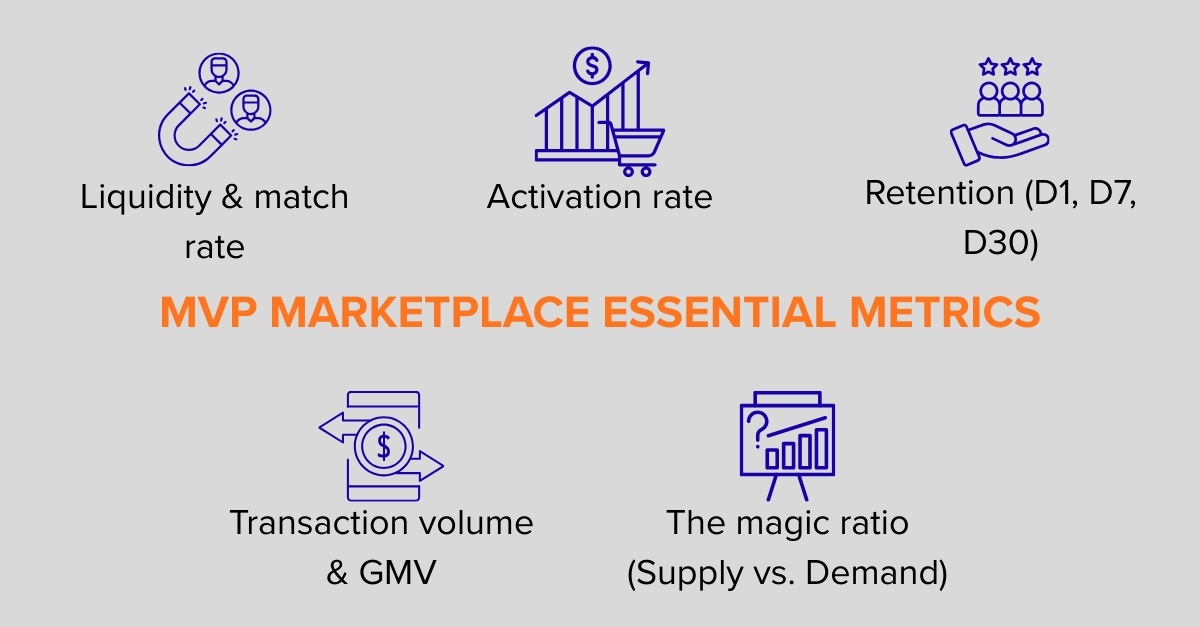
Forget vanity metrics like “registered users.” Track the metrics that prove a marketplace is coming to life. Identifying KPI for success in marketplace startup is critical from day one.
- Liquidity & match rate: The percentage of searches that result in a listing view, and the percentage of listing views that lead to contact. This measures market efficiency.
- Activation rate: The % of new users who complete a key action (seller: creates a listing; buyer: sends a first inquiry/makes a first purchase).
- Transaction volume & gross merchandise value (GMV): The raw proof of economic activity. Even if you’re not taking a fee yet, track the value exchanged.
- Retention (D1, D7, D30): Do buyers and sellers come back? A marketplace without repeat usage is a ghost town.
- The magic ratio (Supply vs. Demand): Monitor the balance. Do you have 10 buyers for every 1 seller? This ratio dictates your focus.
Common MVP Mistakes to Avoid in 2026 (And Beyond)
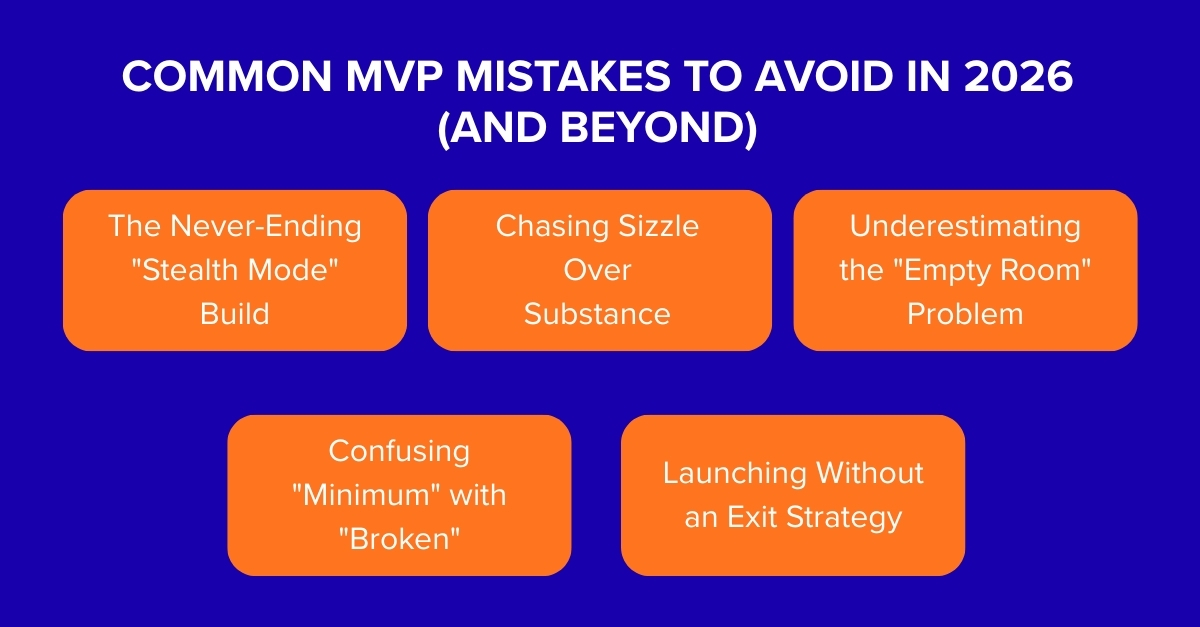
Most marketplace MVPs don’t fail because of a bad idea. They fail because of avoidable missteps in execution. As you prepare to build in 2026, keep these all-too-common traps on your radar.
1. The Never-Ending “Stealth Mode” Build
There’s a romantic idea that you should emerge from a long, secret development cycle with something flawless. In reality, that’s a fast track to irrelevance. An MVP is a conversation starter. If you spend 12 months building in isolation, you’re having a monologue while the market moves on. The sweet spot? 8 to 16 weeks, tops. Anything longer and you’re likely over-engineering. Perfectionism here is procrastination in disguise. Set a public launch date on day one and work backward.
2. Chasing Sizzle Over Substance
With AI tools democratized and no-code platforms everywhere, it’s tempting to pack your MVP with “smart” features. Resist that itch. An AI-powered recommendation engine means nothing if your basic search is clunky. An NFT-based verification system is just noise if sellers can’t upload photos properly. Before you dream about bells and whistles, nail the core transaction. Can a user find what they need, trust the seller, and complete a payment without friction? That’s your foundation. Everything else is decorative – and decoration can come later.
3. Underestimating the “Empty Room” Problem
This is the classic marketplace catch-22: buyers won’t come without sellers, and sellers won’t join without buyers. Hoping they’ll magically appear once you launch is a recipe for ghost-town syndrome. You have to seed the network yourself – manually, relentlessly, and often without any tech at all.
- Recruit your first sellers by hand. Offer them free access, help them set up listings, maybe even pay them to participate.
- Aggregate initial supply yourself if you have to. Become the first “seller” until real ones arrive.
- Pre-load buyer demand from your own network or a waitlist.
Don’t shy away from running a “Wizard of Oz” MVP – where you manually connect buyers and sellers behind the scenes. It’s labor-intensive, but it teaches you more about real user behavior than any analytics dashboard ever will.
4. Confusing “Minimum” with “Broken”
“Minimum” refers to scope, not quality. Your MVP must be viable – which means stable, secure, and usable. If the checkout crashes half the time, or messages fail to send, you’re not testing a business hypothesis; you’re testing users’ patience.
Trust is the currency of any marketplace. A buggy, insecure experience poisons the well for future growth. Invest in the basics: clean design, solid security, mobile responsiveness, and professional testing. The goal is to remove every obstacle except the one you’re testing: whether people want what you’re offering.
5. Launching Without an Exit Strategy
What happens after you launch? Too many teams treat the MVP as the finish line, only to find themselves staring at a dashboard full of data with no idea what it means – or what to do next.
Before you go live, decide how you’ll interpret the results. What metrics signal success? What numbers mean you should pivot? Create a simple framework:
- If we see X in retention and Y in transactions, we’ll double down and build the next feature set.
- If we see Z in user feedback, we’ll reconsider our target audience or pricing.
- If engagement is flat after a set period, we’ll sunset the experiment and try a new angle.
Steering clear of these mistakes won’t guarantee success, but it will keep you in the game long enough to learn what will. In 2026, the most successful founders won’t be the ones with the most features – they’ll be the ones who learn fastest, adapt quickest, and stay ruthlessly focused on the human problem they’re solving.
Build a marketplace MVP on Sharetribe in Weeks, Not Months
When you want to build a marketplace MVP, the biggest strategic decision you’ll make is about your foundation. For smart founders, that foundation increasingly looks like Sharetribe. Unlike piecing together disparate tools or building custom infrastructure that may become technical debt, Sharetribe gives you a purpose-built, production-ready marketplace engine from day one. Think of it as inheriting the entire operational backbone of a proven platform: dual-sided user management, listings, search, secure messaging, and integrated payments are already built, tested, and scalable.
With specialized Sharetribe development expertise, this strategic advantage compounds. Here’s the shift: a skilled team moves you from using Sharetribe to wielding it. They transform its robust framework into your marketplace. This means crafting an onboarding experience that resonates perfectly with your community – whether they’re boutique hoteliers or freelance graphic designers.
It means molding the transaction flow to handle the nuances of your niche, from complex service bookings to simple product sales. And it means seamlessly weaving in the must-have tools, from calendars to payment processors, that make your model tick. The payoff is a distinct, professional, and fully operational MVP platform launched in 4 to 8 weeks, not months.
Success in Action: Real-World MVP Marketplaces by Roobykon
The theoretical blueprint for building a marketplace MVP is powerful, but seeing it applied to real, innovative ideas is truly inspiring. At Roobykon Software, we’ve partnered with visionary founders to turn their unique concepts into functional, learning-focused platforms. Here’s how our clients are validating and scaling their visions:
1. TrainingMatching.com: Simplifying Skill Development
- The Vision: To end the frustrating, multi-tab search for courses, workshops, and coaching by creating a single, intuitive matching platform.
- The MVP in Action: This platform validates the core hypothesis that both learners and trainers crave a centralized, filter-rich directory. By focusing on a seamless search, filter, and booking experience from day one, it directly tackles the user pain point of fragmented information, proving demand for a smarter way to connect knowledge seekers with providers.
2. Rabel: Empowering Independent Creators
- The Vision: To build a direct-to-audience marketplace where content creators keep 90% of their revenue and full creative control.
- The MVP in Action: Rabel’s platform tests a powerful new economic model for digital content. Its MVP focuses on the essential trio for creator monetization: customizable storefronts, a transparent payout system, and a community for supporters. This lean approach validates whether creators will migrate to a platform that prioritizes their financial and creative freedom over traditional, gatekept models.
3. Unity.Love: Building a Global Wellness Community
- The Vision: To create a global ecosystem connecting wellness professionals with individuals seeking holistic experiences for personal and planetary regeneration.
- The MVP in Action: This marketplace MVP centers on community and discovery. By facilitating connections between facilitators and explorers for therapies, retreats, and workshops, it tests the demand for a curated, purpose-driven platform in the wellness space. The focus is on building a trusted network and a viable model for a regenerative economy from the ground up.
4. The Asset Exchange: Powering a Circular Economy
- The Vision: To help organizations like schools and hospitals track, claim, and exchange unused assets, saving money and reducing waste through an AI-powered platform.
- The MVP in Action: This B2B marketplace tackles logistical and environmental challenges. Its MVP validates the core user behavior of listing and claiming surplus equipment within a trusted professional network. By proving that institutions will actively participate in asset-sharing, it lays the groundwork for scaling a platform that turns waste into value.
Each of these marketplaces started with a clear hypothesis and a focused MVP built to test it. They exemplify how a strategic, learner-minded approach – guided by expert development – can transform a simple idea into a viable, growing platform.
FAQ: Your MVP Marketplace Questions, Answered

Recommended articles
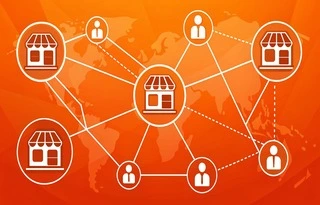 The Ultimate Guide on How To Build a Multi-Vendor Marketplace in 2026
Unlock the secrets of successful marketplaces. This guide explains how a multi-vendor website works and provides a clear plan to build your own, from validating your idea to launching and driving growth.
 Best Rental Business Ideas to Start in 2026
The global sharing economy is projected to hit $335 billion. Discover the high-growth rental sectors that are dominating the new access economy. We break down the initial investment, profit margins, and digital tools you need to launch a scalable and future-proof rental venture.
 Why Your Business Can Benefit From Having a Mobile App
As more and more people become mobile users, marketers strive to reach them via their devices. This is where mobile applications come in handy. Let's find out why you need a mobile app and how to make the most of it.
 How to Build a Mobile App for Your Sharetribe Marketplace
Your marketplace deserves more than just a mobile-friendly site — it needs a true app experience. In this guide, we’ll show you how to build a Sharetribe mobile app by combining Sharetribe’s backend with a custom mobile frontend.