Subscribe and you will promptly receive new published articles from the blog by mail
The most successful online spaces are those that foster genuine connection. A marketplace outperforms traditional inventory-based businesses precisely because it doesn’t carry stock – it facilitates. If you want to understand why the marketplace model generates better unit economics and scales faster than an online store, we’ve covered that in detail here. For this guide, we’re focused on the next question: which specific models are worth building right now.
Key Marketplace Models for 2026
Before diving into which models to build, it helps to understand how marketplaces are classified. If you’re still mapping out the landscape – B2B vs B2C, vertical vs horizontal, product vs service – our full guide to the types of digital marketplaces will give you that foundation.
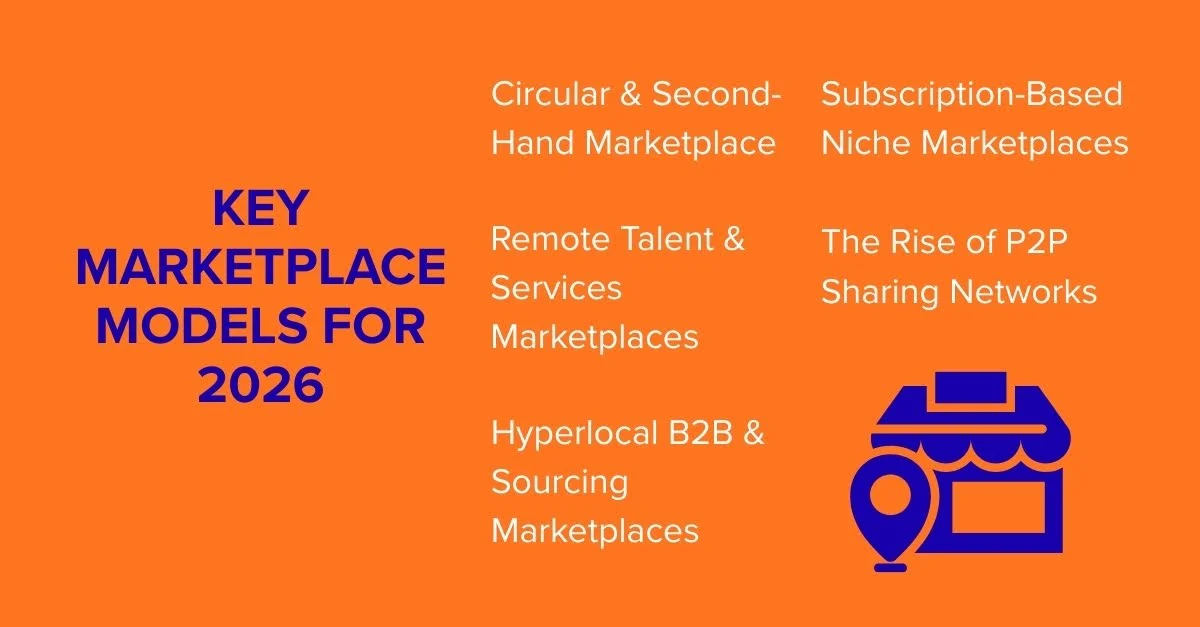
1. The Conscious Consumer Hub: Circular & Second-Hand Marketplace
The linear “buy-use-dispose” model is fading. Driven by economic awareness and a genuine desire for sustainability, consumers are turning to second-hand, refurbished, and upcycled goods. This is a mainstream movement toward conscious consumption.
The numbers confirm the shift: the U.S. secondhand market alone is projected to more than double, reaching $82 billion by 2026. This trend is equally powerful across the Atlantic, where Europe’s secondhand fashion market is projected to grow from €15.9 billion in 2024 to €26 billion by 2030, an average annual growth rate of 8.5%. In Germany, a key European market, the secondhand clothing platform sector is expected to expand from USD 4.0 billion in 2024 to USD 7.6 billion by 2033.
In Australia, the movement is also mainstream. The total recommerce market is expected to reach USD 4.68 billion in 2025 and grow to USD 6.75 billion by 2029. A thriving subset of this is the secondhand luxury goods market, which is projected to grow from USD 646.7 million in 2024 to USD 1,381.5 million by 2033.
Nearly three-quarters (73%) of retail executives are now open to or already offering secondhand goods. For younger generations, this is a first resort – 62% of Gen Z and millennials look for items secondhand before buying new.
A circular marketplace does more than list used items; it builds trust through rigorous quality verification and tells the story behind products. The opportunity lies in moving beyond generalist platforms to serve passionate niches. Success in this online marketplace revenue model 2026 is built on authenticity and a shared mission, creating a community that values both unique finds and positive impact.
Many of the core principles for building trust and scale in such a marketplace are detailed in our guide on how to build a website like Amazon.
2. The Local Lifeline: Hyperlocal B2B & Sourcing Marketplaces
Global supply chain complexities have businesses and consumers looking closer to home. The demand for resilience, speed, and transparency is fueling the rise of platforms that connect businesses with regional suppliers, manufacturers, and service providers.
This is part of a megatrend. The global hyperlocal services market, which includes everything from food and grocery delivery to home utility services, was valued at nearly $3.7 trillion in 2024 and is projected to soar to nearly $10 trillion by 2032. This local sourcing model helps shorten supply chains and strengthen local economies.
The European market is a massive component of this growth. The region’s hyperlocal services sector is projected to be worth USD 959.08 billion in 2025, with another analysis forecasting it to expand from USD 150 billion in 2024 to USD 300 billion by 2033. Similarly, in Australia, the hyperlocal services market is valued at an estimated USD 150 billion in 2024 and is expected to reach USD 300 billion by 2033.
A related hyper-local sourcing market, focused on connecting communities to nearby producers for goods like local produce and crafts, is also on a steady climb, projected to grow from $97.3 billion in 2025 to over $202 billion by 2033. The key is a deep understanding of a specific industry’s pain points and building a platform that emphasizes verified reliability and community-driven reputations. It’s digital convenience meeting hometown reliability.
3. The Flexibility Engine: Remote Talent & Services Marketplaces
The way we work has transformed permanently. Companies seek specialized skills on-demand, while professionals crave autonomy. Remote talent marketplaces are evolving from simple job boards to sophisticated ecosystems that match skill, timezone, and company culture.
The foundation for this model is rock-solid. As of late 2025, 22.9% of the U.S. workforce (over 36.6 million Americans) works remotely. An estimated 75 million U.S. jobs are compatible with remote work, representing over half of the non-self-employed workforce.
The next generation of these platforms will solve for quality and integration. This means robust vetting processes and tools that facilitate seamless remote collaboration. High-growth areas include not just tech freelancing, but also specialized creative roles, virtual assistants, and niche consultants. For founders, the challenge and opportunity lie in curating a trusted community and providing a seamless experience that makes remote work feel connected and coherent.
Who is driving this remote work revolution? The data paints a clear picture:
Demographic | Remote Work Rate | Key Insight |
By Education | Bachelor’s degree or higher: 39.7% | Remote work rates quadruple from high school graduates to college graduates. |
By Occupation | Management & Professional: 37.9% | White-collar, knowledge-based roles dominate remote work. |
By Age | Ages 35-44: 27.3% | Prime working-age adults are the most likely to work remotely. |
By Family Status | With children under 18: 27% | Remote work plays a crucial role in supporting caregiving responsibilities. |
4. The Access-Over-Ownership Network: Peer-to-Peer (P2P) Marketplaces
Why buy when you can share or borrow? The pressure of ownership costs and a shift in consumer priorities are driving growth in P2P marketplace models. This extends beyond physical assets like cars and tools to include financial assets through P2P lending, a sector experiencing explosive growth.
The global peer-to-peer (P2P) lending market is forecast to grow at a blistering compound annual growth rate (CAGR) of 25.73%, skyrocketing from $176.5 billion in 2025 to an estimated $1.38 trillion by 2034. This model offers borrowers simpler processes and often lower rates, while giving investors flexible, direct investment options.
European Market Opportunity: The European P2P lending market represents a major, mature segment of the global industry. It was valued at $768.36 million in 2024 and is expected to grow at a CAGR of 6.5% to reach $1.25 billion by 2031. The region’s growth is fueled by high consumer awareness, trust in fintech platforms, and demand from small businesses seeking tailored financing options. Leading markets include the United Kingdom, Germany, and France, which benefit from clear regulatory frameworks and robust digital adoption. Europe’s strong position in the global P2P lending landscape makes it a key region for platform development.
Australian Market Snapshot: Australia’s P2P consumer lending market continues to develop, with a distinct focus on consumer credit. This regional specialization presents an opportunity for platforms offering alternative lending solutions.
Building a successful P2P sharing marketplace for physical assets hinges on the same core principles: trust and convenience. This requires clear user verification, secure payment handling, and strong insurance frameworks. The most compelling platforms serve specific, community-driven use cases. It’s one of the leading marketplace business model examples 2026, building real-world community networks through digital tools, whether sharing tools or capital.
5. The Curated Connection: Subscription-Based Niche Marketplaces
Moving beyond one-off transactions, the subscription model creates lasting relationships by offering recurring value. This could be a curated box of niche products, exclusive access to rare goods, or a replenishment service for specialty items.
For 2026, the opportunity is in deep curation and community. Consumers are overwhelmed by infinite choice and crave trusted guidance. The marketplace subscription model generates predictable revenue while allowing sellers to plan production and build a dedicated following. The value is in the careful selection, the story, and the sense of belonging to a club with shared tastes. This model aligns perfectly with the broader e-commerce trend where personalized, recurring experiences drive customer loyalty.
European Consumer Base: Europe presents a massive, digitally engaged audience for subscription models. The overall European e-commerce market is substantial, valued at $0.66 trillion in 2024 and forecast to grow to $1.31 trillion by 2033. A key driver is convenience, with over 70% of European consumers making online purchases at least once a month. Platforms that offer hyper-personalization and seamless digital experiences – principles core to the subscription model – are best positioned to capture this growing market.
Australian Market Growth: The subscription e-commerce model is gaining significant traction in Australia, representing a high-growth opportunity. The market was valued at US$5.56 billion in 2024 and is projected to expand at a CAGR of 41.40% to reach US$125.64 billion by 2033. This growth is propelled by consumer demand for convenience, personalized experiences, and an appreciation for curated, time-saving solutions. Australian consumers are also increasingly influenced by sustainability and ethical consumption, making them ideal for subscription services that emphasize these values.
Powering Your Platform: Smart Revenue Models for 2026
Choosing how your marketplace makes money is as strategic as choosing its model. The right income model for online marketplace growth should align with your users’ behavior and your platform’s stage. Today’s most adaptable platforms often use hybrid approaches to diversify income streams and reduce risk.
Revenue Model | How It Works | Best For | Example Platforms |
Commission-Based | Platform takes a percentage (e.g., 10-30%) of each transaction. | General B2C/B2C; aligns platform success with seller success. | Amazon, Etsy, eBay |
Subscription Plans | Sellers pay a recurring fee for access, premium features, or lower commissions. | Services, SaaS tools, platforms with high-value, recurring sellers. | Amazon Seller Plans |
Freemium + Upgrades | Free basic access with paid upgrades for advanced features or visibility. | Attracting a large initial seller base and nurturing their growth. | Etsy, Poshmark |
Featured Listings & Ads | Sellers or third parties pay to promote listings or for ad placements. | Mature marketplaces with high traffic and competitive seller landscapes. | Amazon Sponsored Listings, eBay Promoted Listings |
The 2026 Marketplace Toolkit: AI, Video, and a Privacy-First Data Revolution

Building a standout marketplace in 2026 requires more than a good model and revenue plan. It demands a strategic, technology-forward approach that deeply understands the modern consumer and leverages the most powerful tools of the digital age.
1. AI as Your Operating System
Move beyond basic chatbots. AI becomes your platform’s intelligence, automating and personalizing key operations:
- Smarter Matching & Discovery: Analyzes user behavior to serve hyper-personalized product feeds and perfectly match service buyers with providers.
- Dynamic Operations: Powers real-time pricing suggestions for sellers, predicts inventory demand, and optimizes the logistics of your chosen marketplace fulfillment model.
- Automated Trust & Safety: Proactively scans for fraudulent listings and suspicious behavior to create a safer ecosystem.
- Intelligent Automation: Handles tasks from generating marketing copy to auto-creating SEO-friendly listings, empowering sellers.
2. The Video-Commerce Boom
Video transitions from a marketing tool to a direct sales channel:
- Live Shopping: Host interactive, social buying events with real-time demos and flash sales to drive conversions and loyalty.
- Shoppable Content: Embed clickable hotspots in tutorial, demo, and review videos, allowing instant purchasing.
- Authentic Social Proof: Leverage user-generated video reviews to build trust more effectively than star ratings alone.
- Short-Form Discovery: Use vertical, mobile-optimized video clips on-platform and on social media to attract new users.
3. The Privacy-First Data Strategy
With the end of third-party cookies, your own data is critical:
- First-Party Data is Key: Collect consented data (profiles, behavior, transactions) directly from users. This is your new most valuable asset.
- Build a “Walled Garden”: Use this data to create superior, personalized experiences within your platform without external tracking.
- Transparent Value Exchange: Clearly explain how data improves the user experience (e.g., “This gives you better matches”) to build trust and gather richer data.
- Power Your Advertising: Enable highly effective, privacy-compliant ad targeting for your sellers using your own audience segments.
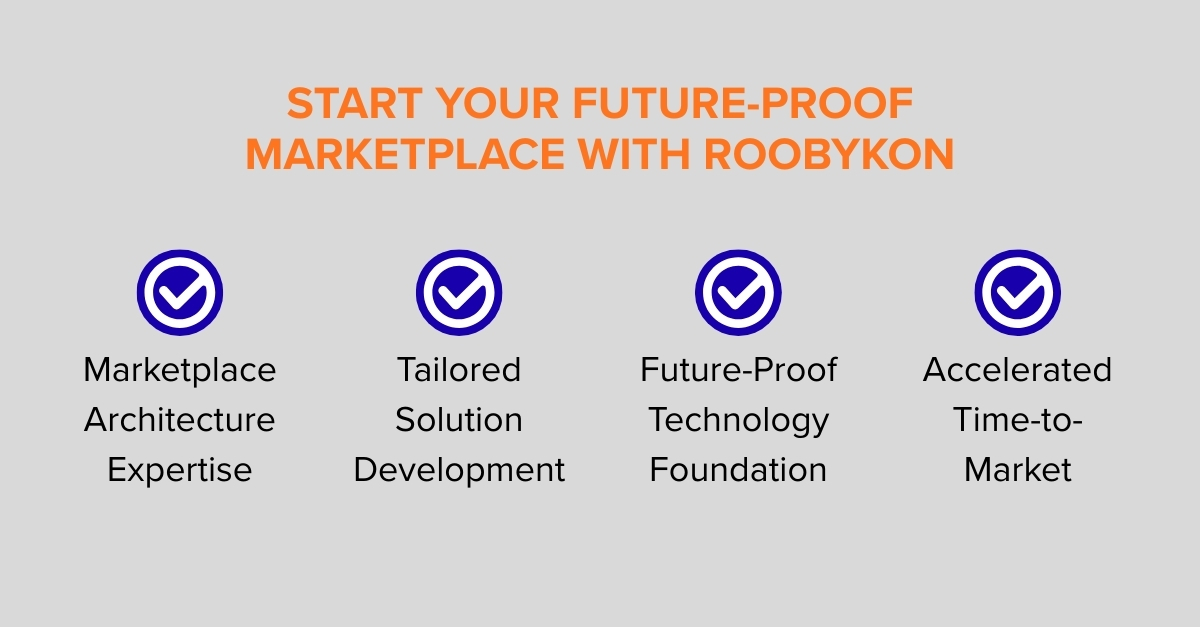
Start Your Future-Proof Marketplace with Roobykon
The vision for 2026 is clear: marketplaces must be intelligent, immersive, and built on a foundation of trusted relationships. Validating and launching such a platform is a significant journey. It starts with a clear vision and a deep understanding of the specific problem you’re solving for both sides of your network. You’ll need to craft compelling value propositions, develop a smart, staged strategy to solve the classic “chicken-and-egg” liquidity problem, and, most critically, choose a technology foundation that is both powerful enough to support these advanced features and flexible enough to evolve.
This is precisely where Roobykon excels. We are not just a development team; we are experienced marketplace architects. As a leading marketplace development company, we specialize in partnering with founders to turn validated ideas into robust, scalable, and future-proof platforms. We have a deep, practical understanding of the nuances across different types of online marketplaces – from B2B sourcing hubs to C2C community platforms – and we build custom solutions meticulously tailored to your unique model, audience, and strategic goals.
For ambitious founders seeking to accelerate their time-to-market without sacrificing quality or customizability, we offer expert Sharetribe development services. Sharetribe provides a powerful, enterprise-grade white-label solution that serves as an exceptional launchpad. Our team extends its core functionality, integrating advanced AI features, video commerce capabilities, and sophisticated data architecture. This approach allows you to launch a fully-functional, branded platform in record time, enabling you to focus your energy and resources on what matters most in the early stages: community building, user acquisition, and growth.
Ready to build the intelligent, immersive, and trusted marketplace that 2026 demands? Let’s start a conversation about your vision.
FAQ: Your Marketplace Business Model Questions, Answered

Recommended articles
 How to Build an Online Marketplace MVP in 2026
Turning a marketplace idea into reality is fraught with risk. This guide cuts through the complexity, showing you how a focused MVP is the antidote.
 The Ultimate Guide on How To Build a Multi-Vendor Marketplace in 2026
Unlock the secrets of successful marketplaces. This guide explains how a multi-vendor website works and provides a clear plan to build your own, from validating your idea to launching and driving growth.
 Understanding the car-sharing business model
At Roobykon, we're fascinated by how digital platforms are transforming mobility, making transportation more flexible, sustainable, and community-focused. In this in-depth guide, we unpack the business logic behind the rise of car, boat, and bike sharing.
 The First 6 Months: What to Expect After Launching Your Sharetribe Marketplace
Building a successful Sharetribe marketplace requires more than launch-day excitement. This article outlines a clear six-month action plan based on real-world metrics, behavior tracking, and user feedback to help marketplace operators scale intentionally and efficiently.