Subscribe and you will promptly receive new published articles from the blog by mail
The digital health revolution isn’t coming, it’s already here, generating $350 billion globally with projections to surpass $542.2 billion by 2028. Behind these staggering figures lies a fundamental shift: healthcare is no longer confined to physical spaces but exists increasingly in the digital realm, where patients expect the same convenience they enjoy in other aspects of their digital lives.
This disconnect between consumer expectations and health and wellness platforms’ delivery presents an extraordinary opportunity for innovative healthcare marketplace builders. This article provides tips for building a nice healthcare practice website. It will be useful for entrepreneurs, healthcare professionals, and tech startups looking to create and scale a successful online healthcare and wellness services marketplace.
Understanding the health market landscape
The online healthcare and wellness market has evolved beyond simple doctor-finder platforms to encompass sophisticated ecosystems integrating primary care, specialty services, mental health support, fitness programming, nutritional guidance, and preventative wellness. Key market segments showing exceptional growth include:
- Hybrid care models: Platforms integrating virtual and in-person services
- Specialty-specific marketplaces: Focused on dermatology, mental health, women’s health
- Value-based wellness platforms: Emphasizing outcomes and preventative care
- Senior-focused telehealth: Addressing the aging population’s specific needs
While venture capital has become more selective post-2022, investors are increasingly targeting platforms demonstrating sustainable unit economics and clear paths to profitability rather than user acquisition alone. The most successful digital health platforms now achieve customer acquisition costs (CAC) under $200 with lifetime values exceeding $950 — metrics unheard of in the previous generation of healthcare marketplaces.
Consumer behavior & needs
Today’s healthcare consumers approach medical care with the same exacting standards they expect from retail experiences, yet several critical needs remain unaddressed. For instance, when it comes to personalized navigation, nearly 92% of patients now prioritize convenience over traditional care settings, actively seeking digital tools that simplify their healthcare journeys. Among those with chronic conditions, about 63% rely on digital health and wellness platforms for remote monitoring — clear evidence that a tailored, user-centric approach is in high demand.
A resounding 98% of Americans support enhanced price clarity, reflecting a broader desire for detailed quality metrics that go far beyond generic star ratings. This trend underscores the public’s insistence on having clear, data-driven insights into provider performance and treatment efficacy.
Financial clarity is equally critical. Approximately 92% of consumers favor policies requiring hospitals and insurers to disclose real prices upfront, with many believing that such transparency could drive down costs through increased competition. This sentiment is further bolstered by the fact that a significant portion of the public (77%) supports political initiatives aimed at enforcing price transparency, highlighting the urgency of this issue in today’s healthcare debate.
Continuity of care also remains a major challenge. About 77% of healthcare teams report that fragmented systems force them to spend excessive time coordinating care across multiple platforms, a fragmentation that has led to one in three patients postponing or even avoiding necessary care due to uncertain costs. These inefficiencies not only delay treatment but also erode trust in the overall healthcare system.
Lastly, integrated health data is a cornerstone of modern healthcare expectations. Roughly 68% of consumers expect online wellness marketplaces to securely connect with their existing health records, thereby enhancing data accuracy and improving patient-provider communication. Yet, even with strides toward integration, inconsistencies persist — 81% of provider directories still suffer from inaccuracies despite ongoing transparency efforts.

Competitive analysis
The current health technology platform landscape features an eclectic mix of industry titans and nimble startups. Major players such as Teladoc and Amwell have established a foothold by offering extensive telemedicine services that cover a broad spectrum of health issues. However, their scale sometimes comes at the expense of personalization and community engagement.
On the flip side, emerging startups are innovating in niches that these larger organizations have yet to fully explore. For instance, some new entrants are integrating AI-driven diagnostics and personalized wellness coaching into their platforms. Others are pioneering the use of wearable technology for real-time health monitoring, thereby enabling proactive interventions before minor issues escalate into major health crises.
Despite these advances, there remains a notable gap in the marketplace: the opportunity to create a holistic ecosystem that not only connects patients with providers but also fosters ongoing community engagement and preventive care. By leveraging advanced analytics and integrating personalized health insights, a new platform can shift the paradigm from reactive treatment to proactive wellness management. This approach not only meets the nuanced demands of today’s consumers but also builds a sustainable model for long-term growth.
Building the healthcare marketplace: from concept to launch
Creating an effective healthcare website requires meticulous planning and innovative thinking. Beyond the conventional steps, delving into nuanced strategies can set your platform apart in a competitive landscape.
Conceptualization & planning
Defining your Unique Value Proposition (UVP)
In a saturated market, distinguishing your wellness marketplace is paramount. Consider offering:
- Holistic service integration: Combine traditional medical consultations with alternative therapies, fitness coaching, and mental health support, providing a one-stop-shop for users.
- Community-driven support: Foster user communities for shared experiences, peer support, and collective learning, enhancing user engagement and retention.

Innovative business models
Beyond standard subscription or commission structures, explore models that align with emerging market trends:
- Freemium with premium enhancements: Offer basic services at no cost, enticing users to upgrade for advanced features like personalized coaching or exclusive content.
- Outcome-based pricing: Charge users based on achieved health outcomes or milestones, aligning your revenue with user success and satisfaction.
- B2B partnerships: Collaborate with employers or insurance companies to provide your platform as a value-added service, expanding your user base through institutional partnerships.
Development and implementation of e-health website
Technical infrastructure
- Robust data security: Implement advanced encryption and regular security audits to protect sensitive health information, ensuring compliance with regulations like HIPAA and GDPR.
- Interoperability standards: Design your platform to integrate with various Electronic Health Records (EHR) systems, facilitating smooth data exchange and enhancing user experience.

Regulatory & legal considerations
- Dynamic compliance management: Establish a dedicated team of healthcare website developers to monitor and adapt to evolving healthcare regulations, ensuring continuous compliance.
- Data sovereignty awareness: Understand and implement data storage solutions that comply with regional laws, especially when operating across multiple jurisdictions.
Vendor & partnership strategy
- Selective onboarding processes: Implement rigorous vetting procedures, including credential verification and trial periods, to maintain high service standards.
- Continuous professional healthcare website development: Offer training and resources to help providers adapt to the digital platform, ensuring consistent and quality user experiences.
- Feedback-driven quality assurance: Utilize user feedback and performance metrics to regularly assess and improve provider services, fostering a culture of excellence.
The process of developing health marketplaces demands not only technical expertise but also a deep understanding of the healthcare ecosystem, user needs, and regulatory complexities.
If you’re looking for expert tips on how to attract both buyers and sellers to your platform, be sure to check out Roobykon’s insightful article, “20 Ways to Attract Buyers and Sellers on the Marketplace.” This guide dives deeper into proven methods that can boost your platform’s visibility and engagement, helping you create a thriving, balanced marketplace.

Overcoming challenges & ensuring sustainability
One of the biggest hurdles is dealing with the many regulations in healthcare. With rules like HIPAA and GDPR, ensuring that all data is handled correctly is critical. Setting up a dedicated compliance team that continuously monitors new regulations and works closely with the medical web development team ensures that the platform remains compliant and adaptable. This flexibility becomes especially important when expanding to new regions, where unique regulations may apply.
Another major challenge is protecting sensitive patient information. The risk of data breaches is always present, so it’s essential to go beyond basic security measures. By using advanced encryption, you can build a system that users trust. It’s also helpful to explain clearly to your users how their data is protected, making them feel more comfortable using your platform.
Integration with existing healthcare systems is another area where many platforms struggle. Many healthcare providers still use older Electronic Health Record systems that don’t easily connect with modern digital tools. By developing open APIs and investing in technology that standardizes data, you can bridge this gap. Working closely with tech experts who specialize in healthcare IT can make this process smoother and ensure your platform works well with the systems already in use.
Getting healthcare providers to adopt a new digital platform can be tough too. Some providers may worry about disrupting their established routines or may find new technology intimidating. Overcoming this requires offering incentives like reduced fees for early adopters and providing comprehensive training that makes the transition as easy as possible. Creating a community where providers can share tips and success stories also helps in building trust and encouraging wider participation.
Lastly, not everyone has equal access to digital technology. Addressing the digital divide is crucial for making your platform inclusive. Medical website development that works well on lower-end devices, offering services in multiple languages, and partnering with local community organizations can help reach those who might otherwise be left out.
For healthcare startups or established companies looking to scale their digital platforms, software development can provide a cost-effective solution. By working with experienced outsourcing marketplace healthcare providers, businesses can access specialized skills, reduce overhead costs, and speed up the development process.
Our healthcare and wellness services marketplace case studies
Parewell – support for parents, all in one place
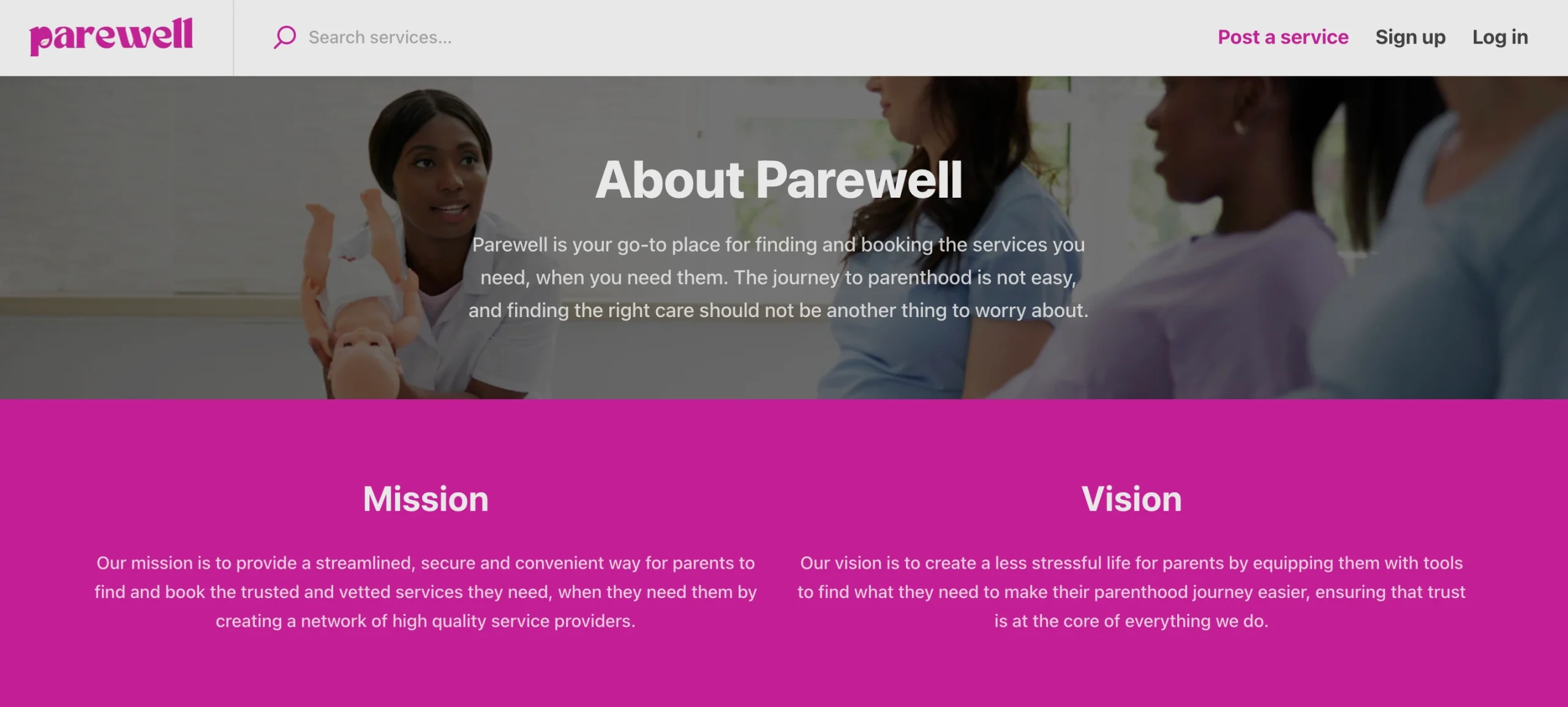
Parewell was born from a clear and important mission — to make a health website that upgrades life for parents by giving them a simple way to find reliable, verified service providers. From daycare to health services, Parewell brings all the essential options into one platform, helping parents make decisions quickly and with confidence.
Knowing the significance of accessibility, we made sure Parewell aligns with the Accessible Canada Act (ACA), a law requiring workplaces and services to be accessible to all individuals, including those with disabilities.
Roobykon’s role was to build a marketplace where trust is everything. We developed features like verified provider badges, clear profiles with reviews, and a file-sharing tool in the chat, so parents and providers could exchange important documents directly on the platform. We also gave providers the flexibility to set their own cancellation policies, making the platform fair and adaptable for different service types.
CareConnect – humanizing the senior care search
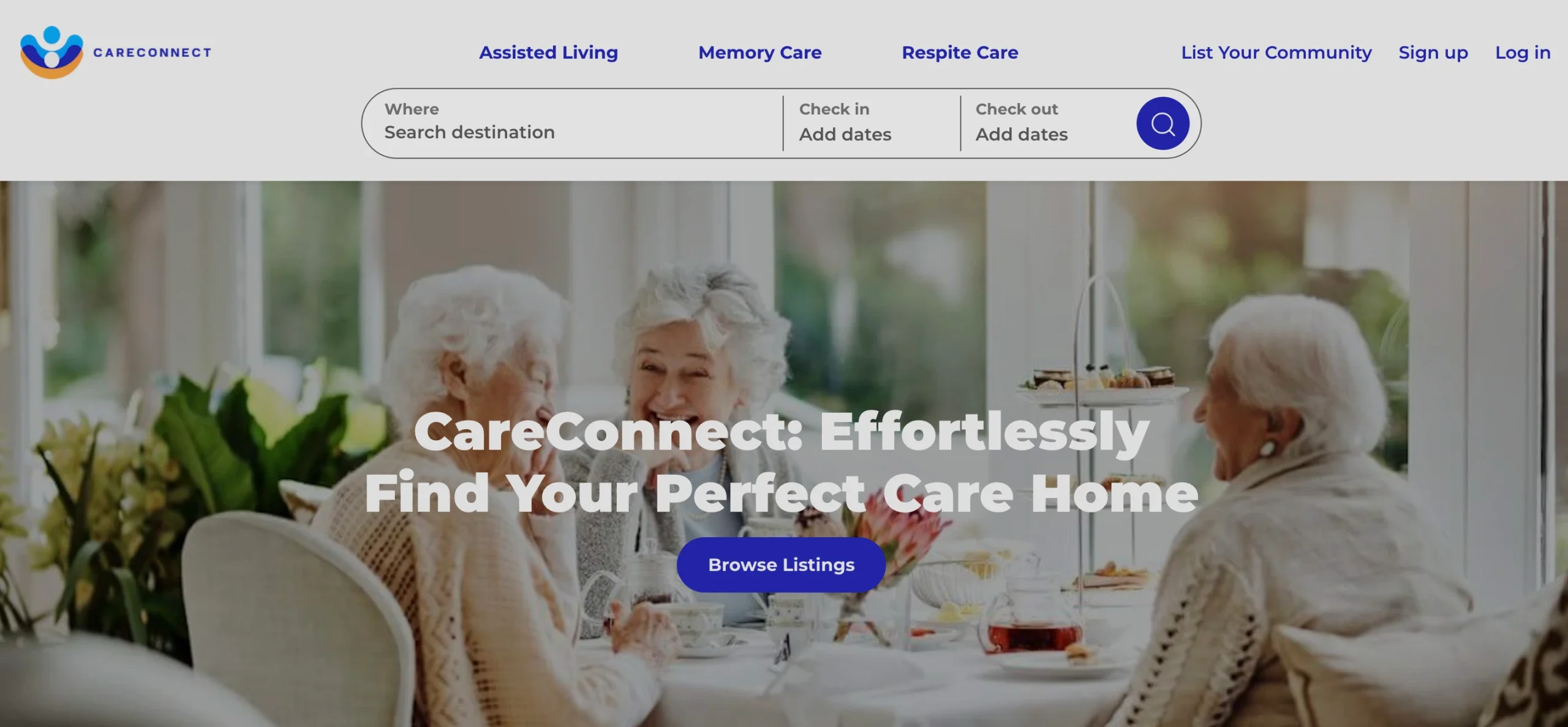
With CareConnect, we stepped into an equally meaningful space: helping families find care options for elderly loved ones. This is a decision that’s not just practical but deeply emotional — and Roobykon’s goal was to create a platform built on empathy and transparency. For those wondering how to create a health marketplace online, CareConnect serves as a strong example of combining thoughtful user experience with specialized functionality tailored to the healthcare industry.
Together with the founder, we focused on features that make the search process clear and intuitive. A custom search with a radius filter allows families to find care homes near their location, while flexible pricing tools let providers offer both nightly and monthly rates, automatically adjusting for longer stays. To make sure the platform works for providers of all sizes, we introduced dual subscription plans, a free plan with transaction fees and a paid plan with no fees. This flexible business model keeps the marketplace accessible to everyone, highlighting Roobykon’s expertise in web development for healthcare marketplaces.
Future trends & opportunities in digital healthcare and wellness
Key trends in digital healthcare
Artificial Intelligence (AI) and Machine Learning (ML)
AI and ML are set to play an increasingly prominent role in diagnostics, treatment planning, and predictive analytics. These technologies are driving a shift toward proactive, personalized healthcare. AI-powered predictive analytics can identify potential health risks even before symptoms appear, allowing for earlier interventions. Moreover, AI-driven digital twins (virtual replicas of individual patients) can simulate responses to treatments, helping healthcare providers choose the most effective therapies. As AI capabilities evolve, businesses exploring healthcare web development will need to account for the integration of these advanced tools into new platforms.
We should note that the use of AI integrations requires the implementation of secure closed models to ensure the safety and privacy of patient data. These closed models help protect sensitive health information, adhering to strict data security protocols while delivering powerful AI-driven solutions.
Telemedicine and virtual care
Virtual care has moved from an emergency response during the COVID-19 pandemic to a preferred and often primary method of receiving care. By 2025, the global telemedicine market is expected to surpass $280 billion, driven by the demand for convenient, remote consultations. Integrated platforms now combine video calls with secure messaging, symptom tracking, and remote patient monitoring (RPM), making virtual healthcare a comprehensive service rather than a simple alternative. For companies planning new platforms, understanding the cost of healthcare website development, especially for feature-rich telemedicine portals, is critical when budgeting for future digital health investments.
Wearable health technology
The rise of smartwatches and advanced fitness trackers has given consumers unprecedented access to real-time health data. These devices have evolved beyond step counting to include continuous heart rate monitoring, oxygen saturation levels, ECG readings, and even stress detection. The combination of wearable tech with 5G connectivity will enable real-time data sharing with healthcare providers, allowing for faster, data-driven decision-making. These capabilities are shaping the web development future trends in healthcare, as new platforms must support seamless integration with wearable devices and their data streams.
Internet of Medical Things (IoMT)
The IoMT, a network of connected medical devices and healthcare systems, enhances remote care, chronic disease management, and preventive health strategies. Sensors in wearable devices, smart medication dispensers, and remote monitoring tools transmit data to care teams, reducing hospital readmissions and enabling continuous care. As more healthcare platforms aim to integrate IoMT capabilities, understanding the cost to build healthcare website solutions that support real-time data processing and device integration becomes essential for project planning and budgeting.
Digital Therapeutics (DTx)
Digital therapeutics are software-based interventions designed to prevent, manage, or treat specific medical conditions. These evidence-based tools are undergoing rigorous validation to gain regulatory approval, with a focus on managing chronic diseases such as diabetes, mental health disorders, and hypertension. This creates opportunities for platforms to integrate DTx into their service offerings, expanding beyond traditional care coordination.
Blockchain in healthcare
Blockchain offers a secure, decentralized way to manage health records, ensuring data integrity and transparency. This technology can also streamline processes such as insurance claims, prescription tracking, and credential verification for providers, all while enhancing patient trust in data security and sharing.

Opportunities in digital healthcare
- Advancing health equity: Digital platforms are uniquely positioned to bridge the healthcare gap for underserved populations. Telehealth and IoT-based remote monitoring can bring essential services to rural communities or individuals with mobility challenges, ensuring that quality care is not restricted by geography.
- Personalized and precision medicine: By combining AI, wearable data, and genomic insights, digital health platforms can deliver hyper-personalized care plans tailored to each individual’s biology, environment, and lifestyle. This level of personalization could become a key differentiator for the future health and wellness marketplace.
- Supporting aging populations: With aging populations worldwide, there is increasing demand for solutions that allow older adults to manage their health at home. Digital platforms can offer tailored services such as home-based monitoring, caregiver matching, and medication management, designed with user-friendly interfaces for seniors.
- Tapping into explosive market growth: The global digital health market is forecast to exceed $387.8 billion by the end of 2025. This rapid expansion presents enormous opportunities for entrepreneurs and service providers to launch specialized platforms targeting specific demographics, conditions, or wellness goals. From online mental health platforms to chronic disease management tools, the space for innovation is wide open.
Final thoughts
As Roobykon Software continues to work with forward-thinking clients in the healthcare website design and development sectors, these trends and opportunities guide our approach to building next-generation platforms. By combining our technical expertise with a deep understanding of patient and provider needs, Roobykon is committed to delivering solutions that not only meet market demands but also make a lasting, positive impact on individuals’ well-being.
If you are a healthcare innovator looking to create a healthcare marketplace, Roobykon is ready to partner with you to turn your vision into reality. Let’s build the future of healthcare together.


Recommended articles
 How To Develop A Popular Real Estate App Similar To Zillow
The real estate market in the US has changed very much. Most users are looking for real estate through mobile applications. Let's figure out how to make real estate App similar to Zillow.
 How To Increase Brand Awareness With Online Marketplace?
The overwhelming trend in e-commerce is towards cross-border shopping – consumers buying goods from sellers in a different country. And online marketplaces are becoming increasingly important as...
 How the new marketplace can rise straight to the top of e-commerce chart
Today's world lives in the rhythm of changing digital technologies that affect every aspect of human life. With the reverse marketplace, the economy is also changing - a completely new model of interaction between customer and business occupies a special place today.
 Alibaba vs Amazon: a battle of two e-Commerce giants [Updated]
The Chinese Giant and the American Colossus find themselves at loggerheads, each determined to drive forward its own vision: a ‘pure’ marketplace on one hand; ‘retailer logic’ on the other. This article shows the main differences between Alibaba and Amazon.